
Why Motorcycle Tire Repair Knowledge Keeps You Rolling
Motorcycle tire repair is a critical skill for every rider. Here’s what you need to know to evaluate your repair options:
Quick Answer: Your Repair Options
- Plug Kits – Best for tubeless tires with tread punctures up to 1/4 inch
- Patch Kits – Required for tube-type tires (more labor-intensive)
- Tire Sealants – Temporary solution for minor punctures
- Professional Repair – Necessary for permanent fixes and safety inspection
- Tire Replacement – Required for sidewall damage, large punctures, or multiple repairs
When NOT to Repair:
- Sidewall punctures
- Holes larger than 1/4 inch (6mm for
- Gashes, cuts, or bulges
- Damage to the tire bead
That sinking feeling when you notice your bike handling differently, a new vibration, or the dreaded realization that you’ve got a flat tire – it’s something most riders face eventually. According to industry data, tire issues account for a significant percentage of motorcycle breakdowns. The good news? More than 60% of Americans don’t know how to change a tire, but you’re about to join the prepared minority who can handle this common roadside emergency.
Being stranded miles from help is frustrating, but carrying the right repair kit and knowing how to use it transforms a potential disaster into a manageable inconvenience. A compact tire repair kit costs far less than a single tow truck call, and the confidence of being self-sufficient on the road is priceless.
Whether you’re commuting daily through city streets or carving through backroads on a weekend ride, understanding your repair options helps you make smart decisions when punctures happen. This guide breaks down everything from choosing the right kit for your tire type to knowing when a repair is safe versus when you absolutely need a replacement.
I’m Sonny Da Badger, I’ve helped countless riders understand motorcycle tire repair and the importance of proper maintenance. My goal is to share practical knowledge that keeps you safe and rolling, no matter what the road throws at you.
Understanding Your Options: Types of Repair Kits
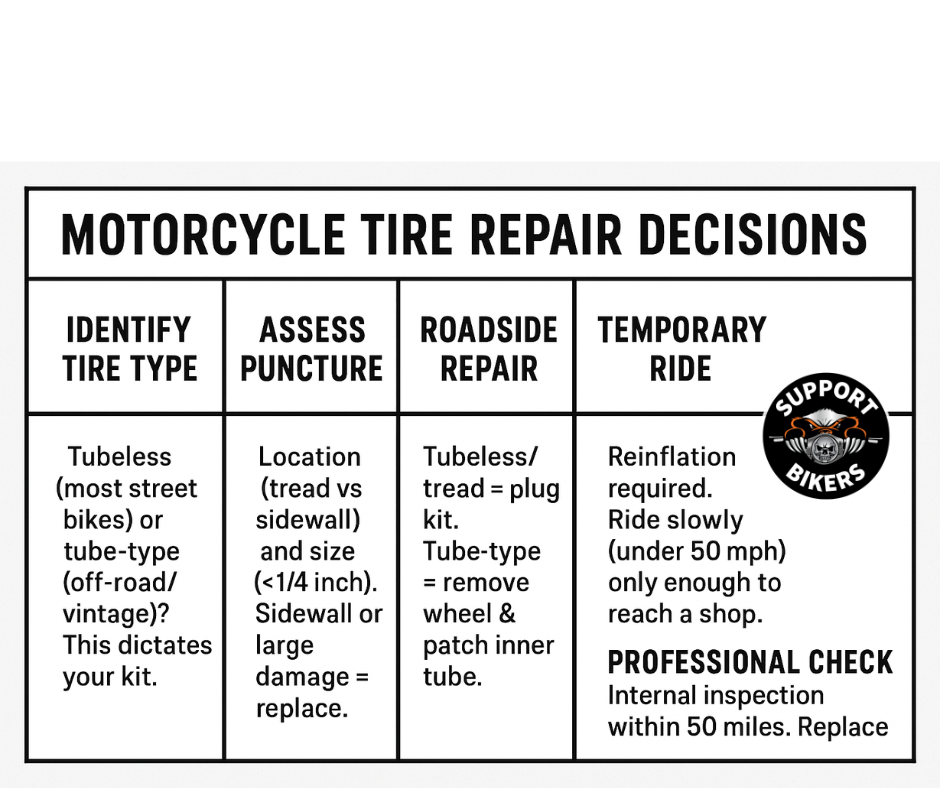
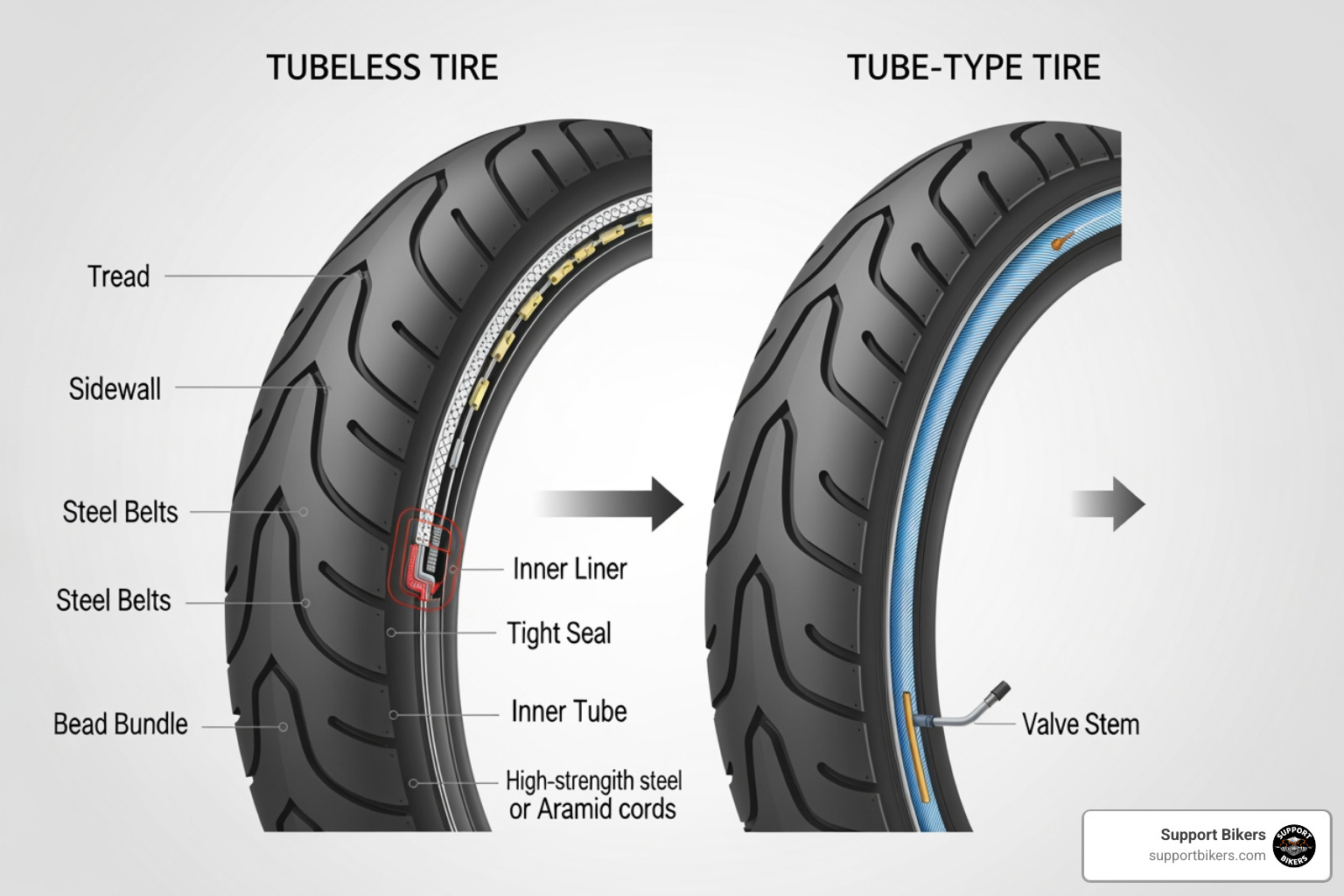
The first step in being prepared is knowing what kind of tire you have and what kit is designed for it. Most modern street bikes, especially those found in the USA, Canada, and Australia, use tubeless tires, while many off-road and vintage bikes still rely on tube-type tires. Choosing the right kit for your motorcycle’s tire type is crucial for an effective repair.
For Tubeless Tires: Plug Kits
If you ride a modern motorcycle, chances are you’ve got tubeless tires. The good news? They’re generally easier to repair roadside than their tube-type cousins. You’re sealing the tire itself rather than wrestling with an inner tube, which makes these repairs much more manageable when you’re stuck on the shoulder of a highway.
String plugs are the most common type you’ll find in basic repair kits. These sticky, rubber-coated strings get inserted into the puncture where they expand to fill the hole and seal the leak. They’re quick, effective, and perfect for getting you back on the road fast. Mushroom plugs offer a more secure seal—they’re inserted from the outside and create a mushroom shape on the inside of the tire when pulled through. They often come with a special insertion tool and provide better long-term performance.
A proper motorcycle tire repair kit for tubeless tires should include a reamer tool to clean and prep the puncture hole, an insertion tool (usually T-handle or pistol-grip style) to push the plug firmly into place, and a supply of tire plugs. You’ll also want rubber cement to help create a strong seal, a blade for trimming excess plug material, and an inflation device like CO2 cartridges or a portable air compressor to get your tire back to proper pressure.
For reliable options, check out the all the options in The Badgers Amazon Store ; .https://www.amazon.com/shop/sonnythebadger/list/30BUXSDVEG60W?ref_=cm_sw_r_cp_ud_aip_sf_list_spv_ons_mixed_d_B3PXJS9DC84S7BMEDCP5
For Tube-Type Tires: Patch Kits
Riding an off-road bike, vintage model, or certain cruisers? You probably have tube-type tires, and that means you’re looking at a different repair process entirely. Plug kits won’t help you here—you need a patch kit designed specifically for inner tubes.
I won’t sugarcoat it: this repair is significantly more labor-intensive. You’ll need to remove the wheel from your bike, break the tire bead off the rim using tire irons, pull out the inner tube, locate the puncture, patch it with vulcanizing cement and a rubber patch, and then reassemble everything. It’s doable roadside if you’ve practiced, but it takes time and patience.
Your patch kit should include patches in various sizes, vulcanizing cement that chemically bonds the patch to the tube, sandpaper or a scuffer to roughen the area around the puncture for better adhesion, and tire irons for prying the tire bead off the rim. A valve stem tool for quick deflation is also handy.
Liquid Tire Sealants
Liquid tire sealants offer a completely different approach to puncture repair. Some riders inject them into their tires preventatively—before a puncture even happens—so the sealant coats the inside of the tire. When a small puncture occurs, air pressure forces the sealant into the hole, sealing it as the tire rotates. Others use sealants curatively after finding a slow leak, injecting the liquid through the valve stem to seal the puncture.
Here’s the important part: these are temporary solutions. They’re designed to get you home or to a repair shop, not to replace a proper plug or patch. Think of them as a band-aid, not a cure. They work best on smaller punctures and shouldn’t be considered a substitute for professional inspection.
Brands like Slime offer tire plug kits that combine sealants with basic plug tools, giving you multiple options for emergency repairs. Just remember that any sealant use should be followed up with a proper repair or tire replacement at a qualified shop.
Roadside Rescue: A Step-by-Step Guide to Motorcycle Tire Repair
Having a repair kit in your saddlebag is only half the battle—you need to know how to use it when that puncture happens. This section walks you through the most common roadside fix: plugging a tubeless tire. But before you even think about touching that flat tire, let’s talk about keeping yourself safe.
Safety First: Pre-Repair Checklist
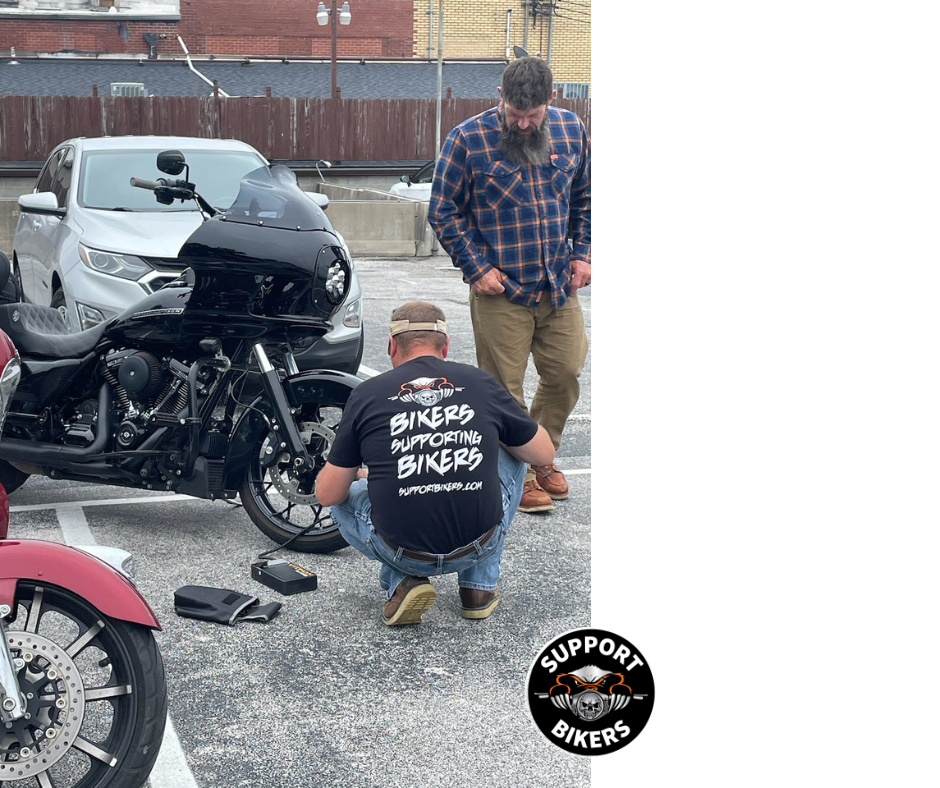
A flat tire usually means you’re stuck on the side of the road, and that’s one of the most vulnerable positions for any rider. Your safety—and the safety of others—comes before any repair work.
Get your bike off the road as far as possible. Look for a level surface that gives you stable ground to work on. Turn on your hazard lights immediately to alert other drivers that you’re there. If you’ve got a high-visibility vest or jacket, now’s the time to wear it. That bright yellow or orange can be a lifesaver when traffic is whizzing past.
Stabilize your motorcycle using your kickstand or center stand. If you’re on soft ground, place something flat under the kickstand—a piece of wood, a small puck, or even a flattened soda can works in a pinch. The last thing you need is your bike tipping over while you’re working on it.
Take a moment to assess your surroundings. If you’re in a dangerous location with no shoulder or heavy traffic, it might be smarter to call for help rather than attempt a repair. Check out this Motorcycle safety guide for more comprehensive tips on staying safe when you’re stranded.
How to Plug a Tubeless Tire
Ready to get that tire plugged? This motorcycle tire repair technique works for tubeless tires with punctures in the tread area only. Here’s how to do it right.
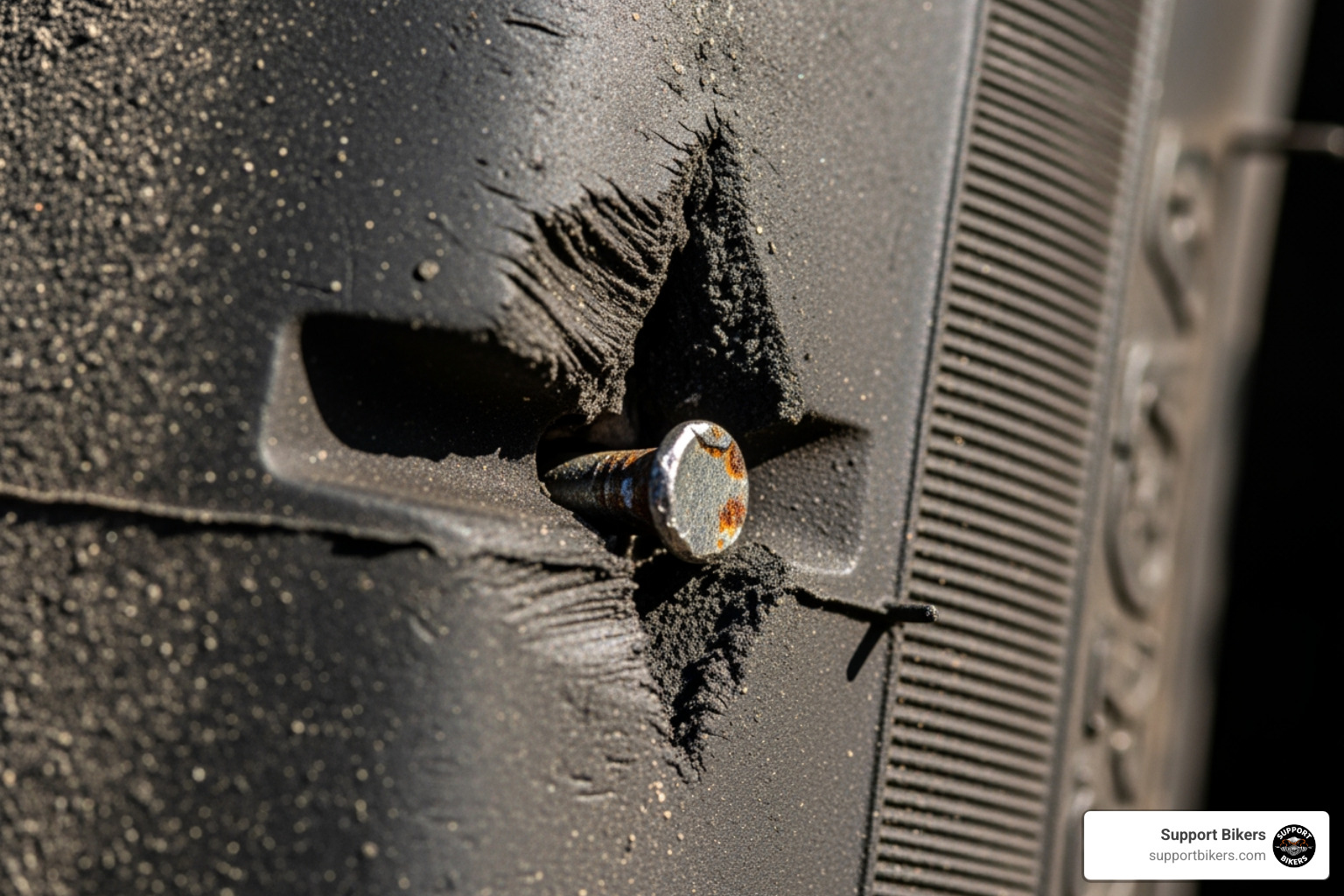
Step 1: Locate and remove the object with pliers. Find whatever caused your flat—usually a nail, screw, or piece of wire. Grab it firmly with pliers and pull it straight out. You’ll hear air escaping, which is completely normal.
Step 2: Ream the hole to clean and prep it. Take your reamer tool (it looks like a rough, spiral file) and push it into the puncture hole. Work it in and out several times, twisting as you go. This cleans the edges of the hole, roughens up the surface for better adhesion, and ensures the hole is the right size for your plug.
Step 3: Thread the plug into the insertion tool and apply cement. Take one of your tire plugs—that sticky, tar-coated string—and thread it through the eye of your insertion tool so equal lengths hang on both sides. If your kit includes rubber cement, coat the plug generously. This helps it slide in easier and creates a stronger seal.
Step 4: Firmly push the plug into the tire. This is where you need some muscle. Push the insertion tool straight into the hole until only about half an inch of the plug remains visible outside the tire. Don’t push it all the way through—you want most of the plug inside the tire.
Step 5: Remove the tool and trim the excess plug. Give the insertion tool a slight twist and pull it straight out with a quick, firm motion. The plug should stay behind, sealing the hole. Use your blade to trim the excess plug material so it’s roughly flush with the tire tread.
Step 6: Re-inflate the tire. Connect your portable air compressor or use CO2 cartridges to bring the tire back up to its recommended pressure. Check your bike’s manual or the sticker on the swingarm for the correct PSI.
Step 7: Check for leaks. Mix some water with a drop of dish soap and spray it on the repair area. If you see bubbles forming, air is still escaping. You may need to add a second plug or reassess the repair.
For a visual walkthrough of this process, check out this video from Sonny Da Badger, where I demonstrate these techniques step by step.
The Fine Print: When NOT to Repair a Tire
A roadside repair is a temporary solution to get you to a professional. Here’s the hard truth: not all punctures are repairable, and attempting to fix an unsafe tire can lead to catastrophic failure. Some riders take unnecessary risks because they don’t understand the limitations of motorcycle tire repair, and it’s simply not worth gambling with your safety.
Unrepairable Damage
Understanding when a tire is beyond saving is just as important as knowing how to fix one. The experts at Michelin emphasize that riders often can’t correctly assess the full extent of damage from the outside, which is why professional diagnosis is so critical.
Sidewall punctures are an absolute no-go. Never, and I mean never, attempt to repair a puncture in the sidewall. This area flexes constantly with every rotation and turn, making it impossible for any repair to hold. The tire’s structural integrity depends on an intact sidewall, and a repair here will fail, leading to immediate and dangerous blowout.
Size matters when it comes to punctures. While some kits claim to handle larger holes, the general consensus among tire manufacturers is that punctures larger than 1/4 inch (6mm for tires rated below VR, or 3mm for ZR-rated high-performance tires) are beyond safe repair with a roadside kit. The hole is simply too large for a plug to create a reliable seal.
Gashes or slices tell a different story than a clean puncture from a nail. These indicate significant structural damage to the tire’s internal layers and cannot be safely repaired. Similarly, multiple punctures close together compromise the tire’s overall structure. Most manufacturers recommend a maximum of two repairs per tire, and only if they’re well-separated from each other.
The tire bead is the critical seal between your tire and rim. If this area is damaged, the tire cannot hold air pressure properly and must be replaced immediately.
A tire is only repairable if the damage falls within what’s called the “T-zone,” which covers approximately three-quarters of the tread area, excluding the edges and sidewall. If damage occurs outside this zone, or if the tire shows signs of internal damage from riding on it while flat (a condition called “mottling”), replacement is your only safe option. To learn if your tire is repairable from the experts, professional inspection is essential.
Why a Roadside Motorcycle Tire Repair is a Temporary Fix
Let me be crystal clear about this: a roadside plug or sealant is not a permanent fix. It’s an emergency measure designed to get you safely off the road and to professional help, nothing more.
Your immediate goal after any roadside repair should be getting to a professional shop. Ride at reduced speeds, typically under 50 mph, and take the shortest route possible. High speeds and long distances put tremendous stress on a temporary repair, and failure at highway speeds can be catastrophic.
Here’s what most riders don’t realize: even a small puncture can cause internal damage to the tire’s structure that’s completely invisible from the outside. If you rode on the tire while it was losing air, the internal layers may have separated or damaged in ways you can’t see or feel.
A professional mechanic will dismount your tire to inspect the interior for hidden damage. They’ll look for the telltale signs of structural compromise that can only be seen from inside. The most effective permanent repair, known as a “mushroom” patch or PRP (Puncture Repair Plug), is applied from the inside, completely sealing the hole and preventing moisture or debris from entering the tire’s structure.
Even if your temporary repair seems to be holding air perfectly, don’t be fooled into thinking you’re good to go. The internal damage could be waiting to fail at the worst possible moment. Always have your tire professionally inspected after any puncture, no matter how minor it seems. You can find the best motorcycle repair shops near you through the Support Bikers directory, where fellow riders recommend shops they trust.
DIY vs. Professional Help: Making the Call
Carrying a repair kit is one option, but it’s not the only one. Understanding the pros and cons of doing it yourself versus calling for roadside assistance can help you make the best choice for your situation and riding style.
The reality is, both approaches have their place in a rider’s toolkit. Some bikers swear by the independence of fixing their own flats, while others prefer the peace of mind that comes with a roadside assistance membership. Your choice often depends on factors like your mechanical confidence, riding location, and budget.
| Feature | DIY Repair Kit | Towing/Roadside Service |
|---|---|---|
| Cost | Inexpensive (kit price, typically under $50) | Can be expensive (towing fees, service charges, membership) |
| Time | Fast (15-30 minutes for a plug) | Can involve long wait times for assistance |
| Convenience | Immediate solution, self-reliant | Someone else handles it, no personal effort required |
| Skill Required | Basic mechanical skills, practice recommended | None (beyond making a phone call) |
| Location Dependency | Requires safe place to work, limited by damage type | Available almost anywhere, handles any type of damage |
Using a Repair Kit
There’s something deeply satisfying about being self-sufficient on the road. When you successfully plug a tire and get rolling again, you’ve just saved yourself time, money, and the frustration of waiting for help.
The cost savings are significant. A quality motorcycle tire repair kit is typically a one-time purchase under $50, which can save you hundreds in towing fees over your riding lifetime. The speed factor is another major advantage—a simple plug can be installed in 15 to 30 minutes, getting you back on the road for a temporary fix much faster than waiting for a tow truck. There’s also the empowerment and self-reliance that comes from handling your own roadside emergency, plus the ability to extend your ride time and keep your adventure going rather than ending it prematurely.
However, DIY repairs aren’t without their challenges. Proper technique requires some skill, and while it’s not rocket science, you really should practice at home before you’re stuck on a highway shoulder. The kit doesn’t work for all damage types—remember, sidewall punctures and large holes need professional attention. There are inherent safety risks when working on the side of the road, and an improperly performed repair can lead to dangerous tire failure. Most importantly, any roadside repair is just a temporary solution to get you safely to a shop for proper inspection and permanent repair.
Calling for Roadside Assistance
Sometimes the best decision is to let someone else handle it. Roadside assistance handles any situation, whether it’s a simple flat or a catastrophic blowout that’s left your bike unrideable. You don’t need any mechanical skills—just make a phone call and wait. It’s also the safer option, keeping you away from traffic and eliminating the risks of roadside repair work.
The downsides are worth considering, though. Without a membership, towing and service calls can be expensive, easily exceeding $100 and sometimes much more depending on distance. Wait times can be long, especially in remote areas or during peak hours—you could be sitting for hours. And in very rural locations, service may not be available everywhere, leaving you stranded anyway.
If you decide calling for help is your best option, Support Bikers can connect you with reliable Motorcycle towing services throughout the USA. Many experienced riders carry both a repair kit and maintain a roadside assistance membership, giving them maximum flexibility no matter what happens on the road.
Frequently Asked Questions about Motorcycle Tire Repair
Let’s tackle some of the most common questions riders have about tire repairs. These answers come from real-world experience and industry best practices.
How long can I ride on a plugged motorcycle tire?
Here’s the truth: a plug is your get-out-of-trouble card, not a permanent solution. Think of it as a Band-Aid, not stitches.
You should ride at reduced speeds under 50 mph and for the shortest distance possible, ideally no more than 50-100 miles. The plug is designed to get you safely to a repair shop, period. High speeds create heat and stress that can cause even a well-installed plug to fail.
A professional mechanic must inspect the tire internally before anyone can determine if it’s safe for continued use or needs a proper permanent repair from the inside. Sometimes the tire has internal damage that’s invisible from the outside, especially if you rode on it while it was losing air. Do not treat a plugged tire as a permanent solution, no matter how well it seems to be holding.
What are the essential components for a motorcycle tire repair kit?
A quality motorcycle tire repair kit for tubeless tires should include several key tools. You’ll need pliers to remove whatever punctured your tire, a reamer tool to clean and prepare the puncture hole, and a plug insertion tool to push the plug into place.
The kit should also contain tire plugs themselves (either string or mushroom-type), rubber cement to help create a strong seal, and a blade for trimming excess plug material. Finally, you’ll need some way to reinflate your tire, either CO2 cartridges or a portable air compressor.
For tube-type tires, the requirements are different. You’ll need tire irons to remove the tire from the rim, patches and vulcanizing cement to repair the inner tube, plus an inflation method. These repairs are significantly more involved than plugging a tubeless tire.
Can I repair a puncture in the tire’s sidewall?
This is one of those questions with a simple, non-negotiable answer: absolutely not. Never, ever attempt to repair a sidewall puncture.
The sidewall is constantly flexing as you ride, and it’s a critical structural component of your tire. Any repair in this area is extremely unsafe and will fail, likely causing a catastrophic blowout at speed. The forces acting on the sidewall are completely different from those in the tread area, and no plug or patch can withstand them.
This rule also applies to punctures on the very edge of the tread where it transitions to the sidewall. If the damage is anywhere outside the central tread area (what professionals call the “T-zone”), the tire must be replaced. Your life isn’t worth gambling on a sidewall repair.
Conclusion: Ride Prepared, Ride Safe
A flat tire is practically a rite of passage for motorcycle riders. It’s not a matter of if, but when. The good news? With the right knowledge and a quality motorcycle tire repair kit stowed in your saddlebag or under your seat, that inevitable puncture doesn’t have to derail your entire day or drain your wallet with an expensive tow.
The key is preparation and practice. Don’t wait until you’re stranded on a lonely stretch of highway to figure out how your tire plug kit works. Spend an afternoon in your garage or driveway familiarizing yourself with the tools. Practice threading a plug, understand how the reamer works, and make sure you know how to operate your portable air compressor. This hands-on experience builds confidence and muscle memory that will serve you well when you’re dealing with the real thing under less-than-ideal conditions.
Remember the golden rule: any roadside repair is temporary. That plug or sealant is your ticket to safety, not a permanent solution. Even if the tire seems to be holding air perfectly and you feel fine riding on it, internal damage could be lurking beneath the surface. Always get to a professional shop as soon as possible and have a trained mechanic inspect the tire from the inside. They can determine whether a proper permanent repair is possible or if the tire needs to be replaced entirely.
You can find trusted, biker-vetted motorcycle repair shops through the Support Bikers directory, whether you’re in California, Texas, Florida, or anywhere across the USA, Canada, or Australia. Our community-curated listings connect you with professionals who understand motorcycles and riders.
Above all else, prioritize safety. No repair, no ride, no destination is worth risking your life. If you’re unsure about the damage, if the puncture is in the sidewall, or if conditions aren’t safe for a roadside fix, call for help. Knowing when not to repair is just as important as knowing how to do it.
Ride smart, stay prepared, and keep the rubber side down.
In the true spirit of bikers helping bikers, we encourage you to support fellow riders who’ve faced the worst-case scenario on the road. When a rider goes down, our community rallies together. Learn how you can make a difference by contributing to the Wrecked Rider Fund.




0 Comments