Buying Used Bike Advice: 10 Crucial Tips to Avoid a Lemon
Why Buying a Used Motorcycle Can Be a Great Deal (If You Know What to Look For)
Buying used bike advice is crucial if you want to score a great motorcycle without getting burned. Here’s a quick overview:
Quick Checklist for Buying a Used Motorcycle:
- Frame & Fork – Check for cracks, dents, or signs the bike was dropped
- Engine – Perform a cold start, listen for unusual noises, check for leaks
- Tires & Brakes – Verify tread depth, check brake pad thickness and rotor condition
- VIN & Title – Run a vehicle history report, ensure the title is clean and not salvage
- Test Ride – Always ride the bike to check shifting, braking, and overall feel
- Price Research – Use online tools to verify fair market value
- Paperwork – Get maintenance records and service history if possible
The appeal of buying a used motorcycle is simple: you get more bike for your money. New motorcycles depreciate significantly the moment they leave the dealership. This means you can often find a bike that’s only a few years old for a fraction of its original price.
However, used bikes come with risks: hidden mechanical problems, covered-up accident damage, or worn-out parts. A “great deal” can quickly become a money pit. The key to avoiding this is knowing what to look for and performing a thorough inspection.
This guide is your roadmap to avoiding common mistakes. We’ll cover where to shop, what to ask, how to spot red flags, and what to inspect before you buy.
I’m Sonny Da Badger. With decades of riding and buying experience, including my time in sales at Black Widow Harley Davidson, I’ve learned some hard lessons. This guide shares that buying used bike advice to save you time and money.
Where to Find Your Next Ride & Initial Red Flags
Once you’ve decided to buy used, the next question is where to look. You have three main options:
Private sellers often offer the best prices. You can ask the owner detailed questions about the bike’s history, but you’re buying “as-is” with no warranty and must handle the paperwork yourself. Online classifieds and social media marketplaces are common spots for private sales, along with local motorcycle forums.
Dealerships offer convenience and peace of mind. They typically inspect bikes, may offer limited warranties or financing, and handle the paperwork. This convenience comes at a higher price, which covers their overhead and profit.
Online marketplaces provide a wide selection from across the country. However, you must do your due diligence on both the bike and the seller, as a good photo doesn’t guarantee a good bike.
Now, let’s talk about red flags. Trust your gut if a price seems too good to be true—it often is. Beware of pressure tactics from sellers pushing for a quick sale. Vague answers about maintenance or history are also a warning. The biggest red flag is a refusal to show paperwork. Always demand to see a clean title in the seller’s name. No title, no deal. A salvage or rebuilt title that wasn’t disclosed upfront is also a major problem.
Your buying used bike advice at this stage is simple: be patient and skeptical. The right bike will come from a transparent seller with all their paperwork in order.
Key Questions to Ask: More Buying Used Bike Advice
Once you find a bike that interests you, it’s time to dig deeper with these questions:
- Ownership and Selling Reason: “How long have you owned it, and why are you selling?” An upgrade is a better answer than recurring mechanical issues.
- Maintenance History: “Do you have service records?” Documented service is gold; no records is a gamble. Find out when the last service was and what was done.
- Accident History: Ask directly, “Has the bike ever been in an accident?” A minor drop is different from a major crash. You’ll verify their answer during your inspection.
- Modifications: “What aftermarket parts are on it, and who did the work?” Professional upgrades are good; sketchy DIY wiring is not.
- Current Issues: “Is anything not working or in need of repair?” Honest sellers will disclose minor issues, which can be negotiating points.
- Mileage Verification: Verify the mileage against records and the odometer. High mileage isn’t always bad if the bike was well-maintained.
- Additional Photos: For online listings, ask for detailed photos of any wear, damage, and key areas like the engine and tires.
These questions gauge the seller’s honesty. Clear answers and documentation build trust. Evasiveness is your cue to keep looking.
The Pre-Purchase Inspection: Essential Buying Used Bike Advice
This is the most important part of your buying journey. A thorough pre-purchase inspection is the most valuable piece of buying used bike advice we can share. Rushing this step is a common and costly mistake.
Bring a knowledgeable friend for a second opinion. Pack a flashlight, rags, and a small mirror for a detailed inspection.
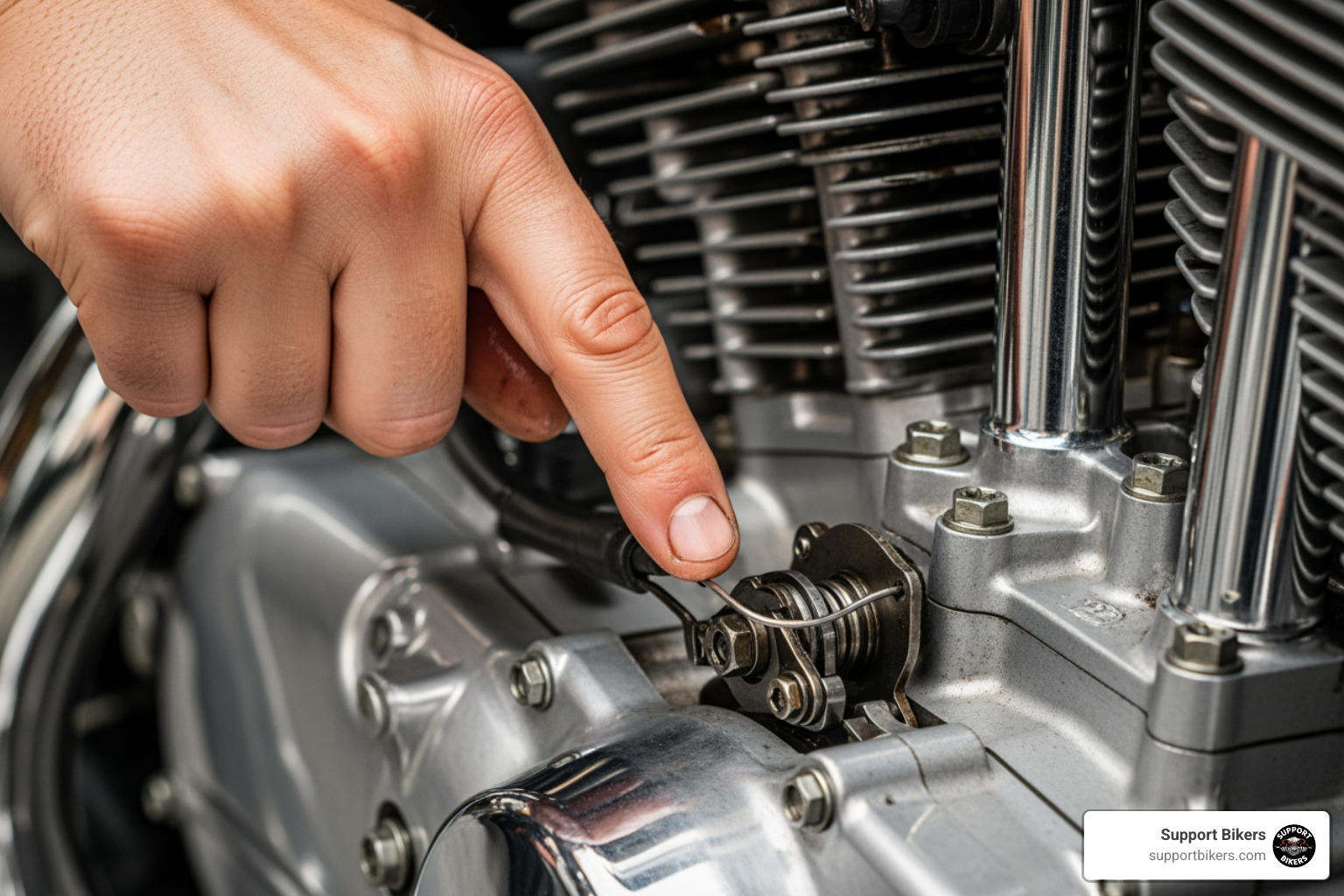
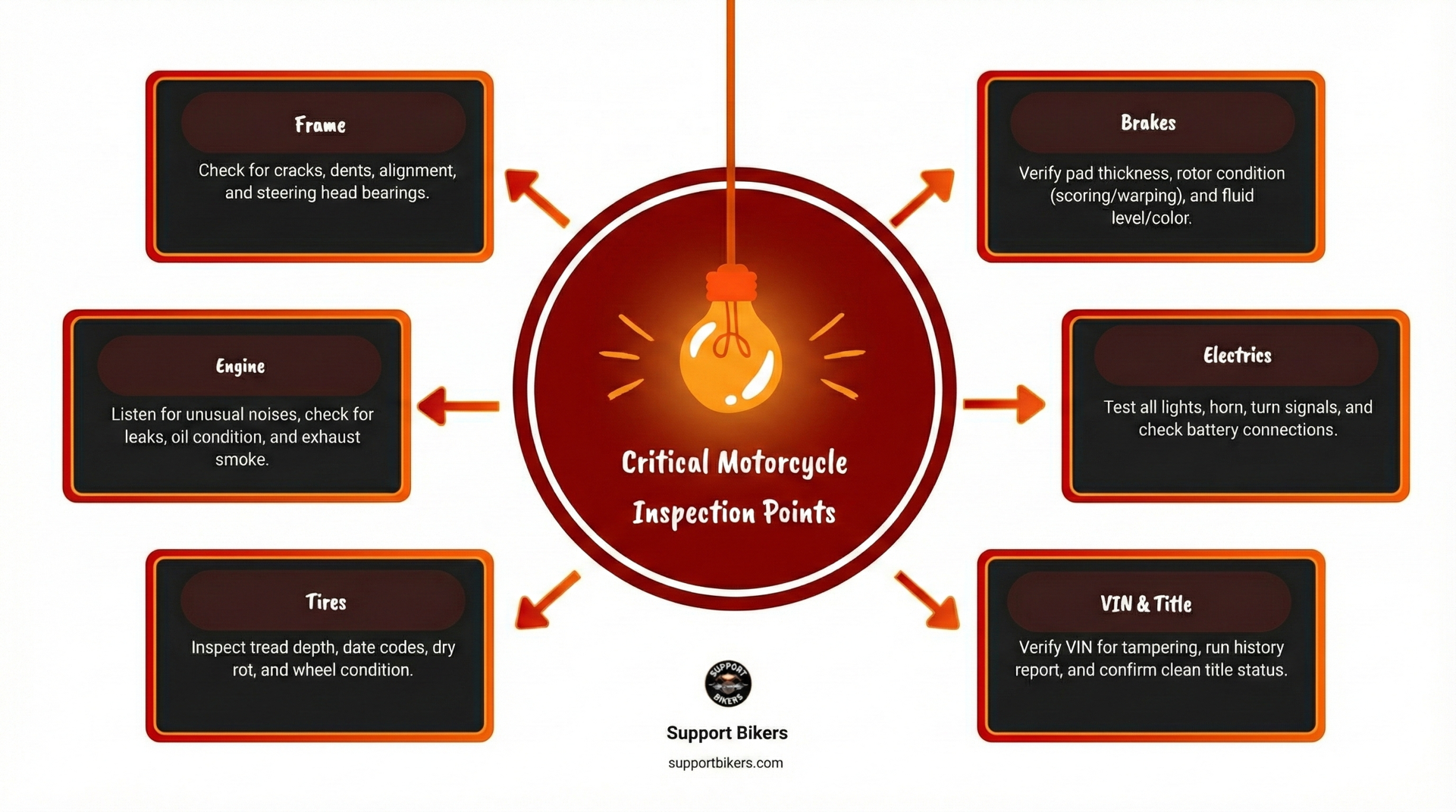
Always inspect the bike cold. A seller might warm it up to hide starting issues. On startup, listen for knocks or grinding. Watch the exhaust: blue smoke indicates burning oil, while white smoke can mean a coolant leak.
Look for signs of a drop: scrapes on bar ends, levers, engine cases, or exhaust. Minor cosmetic damage is expected, but deep gouges suggest bigger problems. The bike’s wear should be consistent with its mileage.
As Sonny Da Badger always reminds riders, “A little sweat in the inspection saves a lot of tears (and money) on the road!”
The Frame and Suspension Check
The frame is the bike’s skeleton. Check for cracks (especially around welds), dents, or kinks. Test the steering head bearings for play by rocking the bike with the front brake on. Inspect front fork seals for oil leaks and the chrome stanchions for pits or scratches. Check the rear shock for leaks. Finally, ensure the wheels are perfectly aligned, which indicates a straight frame.
Engine and Drivetrain Inspection
With the engine running, listen for persistent knocks or ticks. Look for oil or coolant leaks from gaskets and hoses. Check the oil; it should be clean and at the proper level. For the drivetrain, inspect the chain for rust and tight spots, and check sprockets for hooked teeth. On belt-drive models, look for cracks or fraying. On shaft-drive bikes, check the final drive for fluid leaks.
Brakes, Wheels, and Tires
Brakes are a top priority. Check brake pad thickness and inspect rotors for deep grooves or warping. Brake fluid should be clear, not dark. Examine tires for tread depth and look for the four-digit date code on the sidewall; replace any tire older than five to seven years, regardless of tread, due to dry rot. Spin the wheels to check for wobbles or dents. If equipped, ensure the ABS light turns on and then off after starting.
Any issues you find become powerful negotiating tools or reasons to walk away entirely.
Verifying Legitimacy and Fair Market Value
You’ve inspected the motorcycle and are feeling good about it. Now it’s time for some detective work to verify its legitimacy and price.
The Vehicle Identification Number (VIN) is the bike’s fingerprint. Find it on the steering head or frame and ensure it matches the title exactly. Look for signs of tampering like grinding marks or altered digits; a tampered VIN is a major red flag for theft.
Once you’ve verified the VIN, run a vehicle history report through a service like the National Vehicle Title Information System. This can reveal theft history, major accidents, or a salvage title. A salvage title drastically reduces value and can make the bike difficult to insure or register.
To determine a fair price, use online valuation tools as a baseline, but consider your local market. Crucially, factor anticipated repair costs into your offer. If it needs new tires ($300-$500) or a chain and sprockets ($200-$400), that amount should be deducted from the asking price.
Specifics for Cruisers vs. Sportbikes: Custom Buying Used Bike Advice
Your inspection priorities should reflect the type of bike. Here’s some custom buying used bike advice based on motorcycle style.
Cruisers: Check chrome for pitting or rust and leather for wear. Listen for unusual engine noises beyond the typical V-twin rumble. Test low-speed handling, as heavy bikes can hide frame issues.
Sportbikes: Look for signs of track use, like safety-wired bolts or extreme tire wear. Inspect plastic fairings for cracks or poor repairs, as they are expensive to replace. Listen for engine noise at high RPMs, which can indicate a hard life.
Touring Bikes: Test all electronics—GPS, heated grips, audio systems—as repairs are costly. Check integrated luggage for cracks and proper latching. Evaluate comfort features like the seat and adjustable windscreen.
As Sonny Da Badger learned during his years at Black Widow Harley Davidson, understanding these bike-specific differences gives you the upper hand in negotiations and helps you avoid buying someone else’s headache.
Negotiating the Price and Sealing the Deal
Your thorough inspection provides your negotiating power. Use the issues you found—worn tires, thin brake pads, an old chain—as leverage to reach a fair price.
This is key buying used bike advice: calculate the cost of necessary repairs and present these figures during negotiation. A bike needing $500 in tires and brakes isn’t worth the same as one that’s ready to ride.
Be realistic. Most sellers expect to negotiate and often accept offers 10-20% below asking. Make a fair offer based on your research and the bike’s condition; lowballing can end the conversation.
If a seller is inflexible on an unfair price, be prepared to walk away. I learned at Black Widow Harley Davidson that you should always trust your gut; there will always be another motorcycle.
Once you agree on a price, focus on the paperwork. The VIN on the title must match the bike’s VIN. Ensure the seller signs the title over correctly. Get a bill of sale listing the VIN, price, and date, signed by both parties. Use a safe, traceable payment method like a bank check or cash at a bank. Do not hand over payment until the title is properly signed.
Support Bikers connects riders with trusted motorcycle businesses and resources throughout the buying process. And if the worst should happen down the road, the Wrecked Rider Fund is here to help when you need it most.
Frequently Asked Questions about Buying a Used Motorcycle
Here are answers to common concerns, along with the buying used bike advice I wish every rider knew before making a purchase.
What’s the biggest mistake people make when buying a used motorcycle?
The biggest mistake is skipping a thorough mechanical inspection. Riders fall for a bike’s looks and ignore its condition. Another critical error is failing to verify the VIN and title status, which can lead to legal and financial disaster. Finally, don’t give in to pressure for a quick sale; it’s often a red flag.
Is it better to buy from a dealer or a private seller?
It depends on your priorities. Dealers charge more but offer convenience, inspections, potential warranties, and handle paperwork. This provides peace of mind. Private sellers offer better prices and direct owner history, but sales are “as-is” with no warranty, and you handle the paperwork. If you’re knowledgeable and willing to take on more risk for a better price, go private. If you value security, a dealer is a safer bet.
How much should I budget for immediate repairs on a used bike?
It’s smart to budget for immediate needs. A good rule of thumb is to set aside 10-20% of the purchase price. This fund covers common consumables that may need replacing soon, such as tires ($300-$600), fluids (oil, brake fluid), a new chain and sprockets ($200-$400), or brake pads. This isn’t pessimistic; it’s being prepared to keep your bike safe and reliable without financial stress.
Trust me, that buffer between you and unexpected expenses makes all the difference in actually enjoying your motorcycle instead of stressing about it.
Your Road to a Great Used Motorcycle
Buying a used motorcycle is a rewarding way to get more bike for your money and avoid initial depreciation. As this guide has shown, following solid buying used bike advice is key to avoiding costly mistakes.
The three pillars of a smart purchase are: inspect thoroughly, verify everything, and negotiate fairly. Rushing is a recipe for regret. A few hours of due diligence can save you thousands of dollars and future headaches.
You’re not just buying a motorcycle – you’re investing in your freedom, your adventures, and your safety. A reliable ride brings countless miles of joy, while a lemon brings stress, repair bills, and time off the road. With the knowledge you’ve gained from this guide, you’re now equipped to spot the difference.
Be patient in your search. The right motorcycle is out there. Trust your instincts, use your checklist, and don’t be afraid to walk away from a deal that doesn’t feel right. There will always be another bike.
Here at Support Bikers, we’re passionate about helping riders make informed decisions. Whether you’re looking for a trusted mechanic, a reputable dealer, or just more information, we’ve got you covered. Now get out there and find your perfect ride—the open road is waiting. And remember, if the worst happens on the road, the Wrecked Rider Fund is here to help.

0 Comments