Understanding the Lifeline of Community After Limb Loss
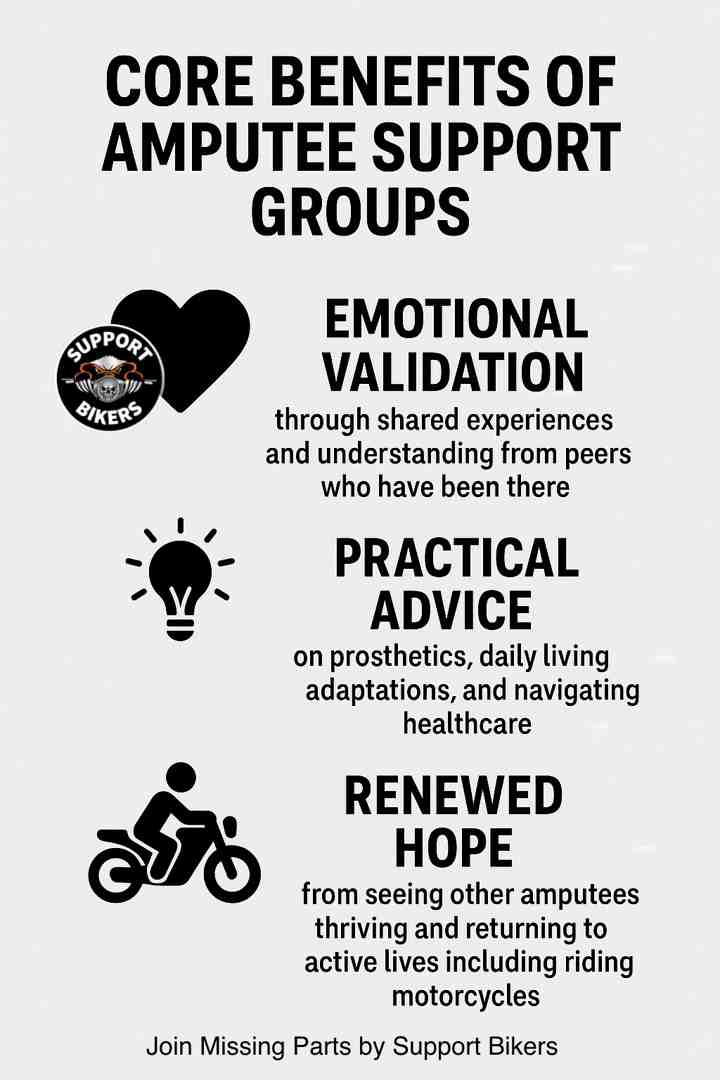
Support group for amputees provide a vital lifeline for individuals navigating life after limb loss, offering emotional validation, practical advice, and a welcoming community. Here’s what these groups offer:
- Emotional support from peers who have walked the same path
- Practical information about prosthetics, daily living, and recovery
- Peer mentorship connecting you with experienced amputees
- Virtual and in-person options to fit your schedule and comfort level
- Specialized groups for youth, caregivers, and specific types of limb loss
- No cost for most support groups and peer visitor programs
Nearly 2 million Americans live with limb loss. If a motorcycle accident changed your life, you’re facing an unimaginable journey—but you don’t have to face it alone. The physical recovery is hard, but the mental and emotional battles are often tougher.
This is where support groups become game-changers. They connect you with people who get it because they’ve lived it. With over 400 support groups registered with the Amputee Coalition, plus others through organizations like Support Bikers, a community is ready to welcome you.
This guide will walk you through finding and benefiting from amputee support groups, covering the types of support, peer mentorship, and resources for your family.
I’m Sonny Da Badger, and I know that a support group for amputees is a powerful tool to rebuild your life and get you back on the road. The biker community is one of the strongest support networks you’ll find, and it’s here for you. Shout out to Rhonda Burton, Brittany Charette, Shaun Webster and Zack Geisler for helping us launch the community and becoming our Ambassadors.
1. The Core Purpose: Why Joining a Support Group Matters
When you lose a limb after a motorcycle wreck, the world feels completely different. The grief, anger, and questions can be overwhelming. This is exactly why a support group for amputees exists. It’s a place where you can immediately feel understood because everyone there has lived it. They understand phantom pain and the frustration of being told to “stay positive.”
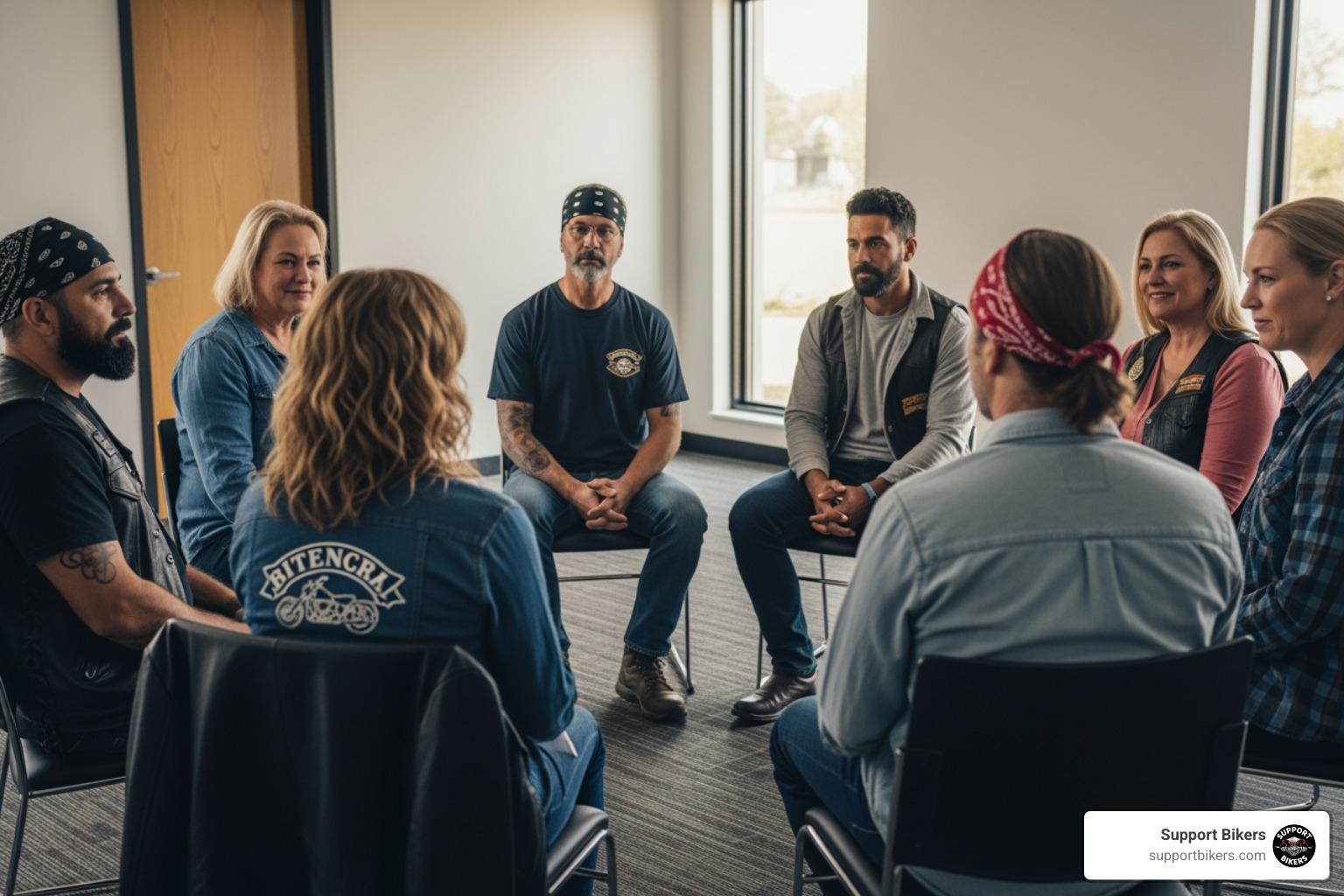
The primary purpose is coping with limb loss in a space where emotional healing can happen. Your psychological well-being is as important as your physical recovery. Connecting with others normalizes your feelings and reduces the crushing isolation that often follows limb loss. You’re not alone; you’re part of a community that’s figured out how to keep living, laughing, and riding. For more on the broader support available, see our guide on motorcycle accident support.
The Power of Shared Experience
There’s magic in connecting with someone who just gets it. When another rider talks about getting back on a bike after limb loss or shares how they modified their controls, it shows you what’s possible. It’s one thing for a doctor to say you’ll adjust; it’s another to see someone who lost a leg now leading group rides.
These connections help with building confidence. You see others managing their prosthetics and think, “Maybe I can too.” You get practical tips no textbook covers—like which boots work best or how to handle a stump swelling after a long ride. The long-term adjustment becomes less scary when you see real people thriving and finding new possibilities.
How Support Contributes to Well-Being
The mental health benefits are real. Sharing your struggles in a non-judgmental space makes depression and anxiety more manageable. These groups help rebuild your sense of community and improve social skills that may have faded during recovery.
There’s real empowerment in learning from others. The group becomes a powerhouse of collective knowledge for navigating the healthcare system, from dealing with insurance to finding the right prosthetist. This isn’t about feeling sorry for yourselves; it’s about building each other up and reminding each other that you’re tougher than you think.
2. The Different Flavors of Support Available
There’s no one-size-fits-all approach to support after limb loss. Some riders prefer face-to-face meetings, while others find their voice online. The good news is, you have options.
| Factor | In-Person Support Groups | Virtual Support Groups |
|---|---|---|
| Accessibility | Limited by location, transportation, and physical mobility | Highly accessible from anywhere with an internet connection |
| Anonymity | Less anonymous; direct personal interaction | More anonymous; can participate with camera off/alias |
| Spontaneity | Scheduled meetings, less flexible for immediate needs | Can offer more frequent or on-demand check-ins, flexible |
| Geographic Reach | Local community focus; limited to physical proximity | Global or national reach; connects diverse experiences |
Types of Assistance Offered in a Support Group for Amputees
A quality support group for amputees offers a full toolbox for rebuilding your life. Key assistance includes:
- Emotional support: The foundation of any group is peer-to-peer connection and understanding.
- Informational resources: Get the latest on prosthetic tech, pain management, and daily living adaptations.
- Guest speakers: Hear from physical therapists, prosthetists, and mental health professionals.
- Practical advice: Learn about prosthetic care and maintenance and daily living strategies, including tips for getting back to riding.
- Social networking: Build a support system of friends who genuinely understand your journey.
Types of Amputee Support Groups
You can find a support group for amputees that fits your specific needs.
- In-person meetings offer irreplaceable human connection and are often held at rehabilitation centers or community spaces.
- Virtual and online groups are game-changers for those in rural areas or not ready for face-to-face interaction. The Amputee Coalition hosts weekly online groups and their AC Connect platform is a great virtual hub. The Amputee Coalition of Canada offers similar support.
- Specialized groups cater to different needs. General limb loss groups welcome everyone. Youth groups focus on younger individuals, while caregiver-specific groups support family members. Some groups focus on upper limb or lower limb amputations, allowing for targeted discussions on challenges like adapting handlebars or foot controls.
If you’re looking for more personalized guidance, professional counseling can be a great supplement. Check out options like Luminous Counseling in our directory.
3. Missing Parts Support Group by Support Bikers
Start with Missing Parts by Support Bikers, our amputee peer group launched in November for riders navigating life after a motorcycle accident. It offers real talk, practical tips on prosthetics and riding again, and a judgment-free crew that understands.

With the Missing Parts group, you can widen your circle through the Support Bikers community. Regional hubs like Support Bikers Florida and the national network make it easy to find meetups, virtual check-ins, and rider-led chats. Browse their listings to connect by city or interest, and join video meetups when travel is tough. If you prefer one-on-one, mentors and peer matches are available, so you can ask real-world questions about recovery, prosthetics, and getting back on the road.
Join Missing Parts via our Facebook Community invite. You can also explore hospital or rehab referrals and other community-led groups. Try a couple sessions; what matters is finding the room where you feel seen, supported, and hopeful. The right fit feels safe, consistent, and leaves you feeling seen and more hopeful.
What to Look for in a Quality Support Group for Amputees
Not all groups are created equal. Here’s what to look for in a quality support group for amputees:
- Trained facilitators: Many organizations offer Certified Peer Visitor programs to ensure leaders can guide discussions effectively.
- Welcoming environment: You should feel comfortable and validated from your first meeting, regardless of where you are in your journey.
- Clear guidelines: Ground rules about respectful communication and structure create a safe and predictable space.
- Consistent meetings: A regular schedule allows you to build genuine relationships and track your progress.
- Focus on empowerment: The group should point toward adaptation and independence, leaving you feeling hopeful, not defeated.
- Confidentiality: What’s shared in the group must stay in the group. This trust is non-negotiable.
4. The Power of One-on-One Peer Mentorship
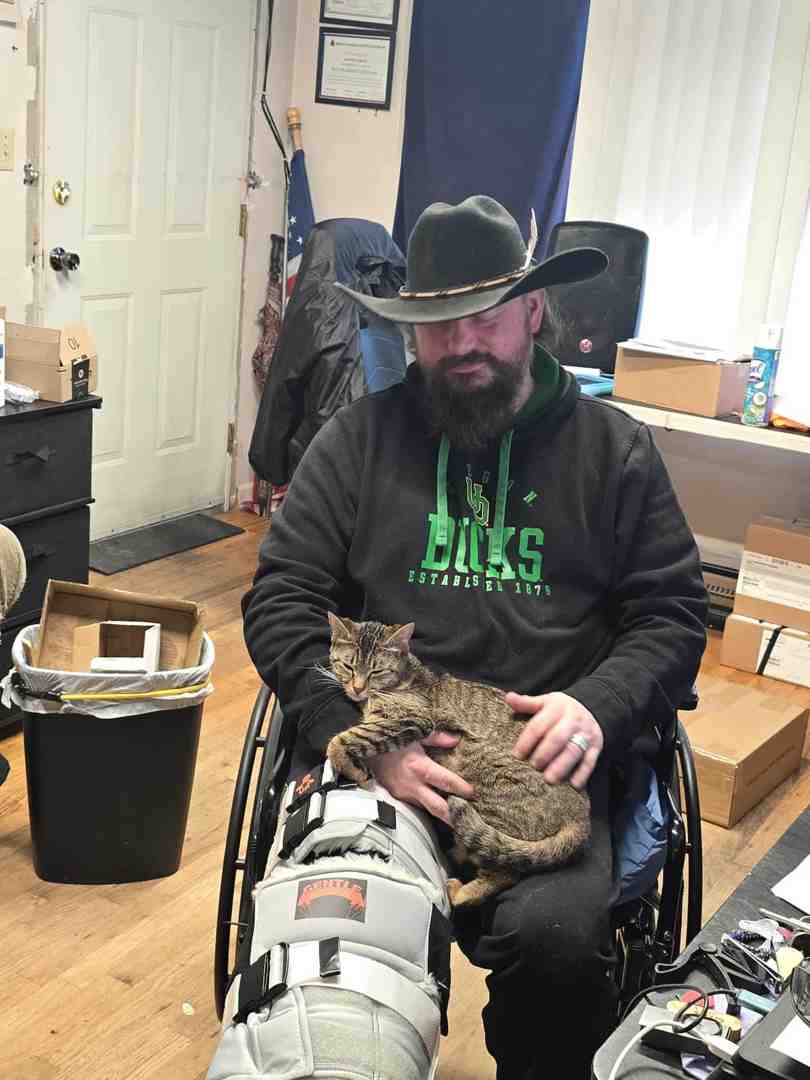
Sometimes, what you need most isn’t a group, but one person who truly gets it. That’s where one-on-one peer mentorship comes in. A peer mentor is someone with lived experience in limb loss who has made it to the other side. For bikers, this often means connecting with another rider who’s already figured out how to adapt their bike and has felt the wind in their face again.
The beauty of a mentor is the practical guidance they offer. They’ve already solved the real-world problems you’re facing, from securing a prosthetic for a ride to finding a mechanic who understands adaptive mods. This saves you time and frustration.
Beyond the practical, there’s profound emotional validation. Hearing “I’ve been there” from a peer is different than from a counselor. They are living proof that your feelings are normal and there’s a path forward. Their lived experience shows you possibilities you might not have imagined. A good mentor creates a safe space to ask the tough questions about intimacy, identity, and feeling whole again. For our biker community, connecting with a mentor who rides can be life-changing.
5. Support for the Support System: Resources for Families and Caregivers
When a rider you love loses a limb after an accident, your world changes too. Partners, parents, and friends are often thrust into a caregiving role they never expected. The truth is, a support group for amputees isn’t just for the person with limb loss; their support system needs support just as much.
The emotional, physical, and financial toll on caregivers can be overwhelming. You’re managing your own fear and uncertainty while trying to be a rock for your loved one. Caregivers often feel isolated as they steer medical appointments, learn about rehabilitation, and handle new household dynamics. If you’re facing financial hardship, help with financial strain might be an option.
This is why dedicated caregiver groups are so important. They provide a space to be honest about the challenges without feeling guilty. You can connect with others who understand the unique exhaustion and frustration of the caregiving journey.
These groups share practical strategies for communication, stress management, and self-care. Taking care of yourself isn’t selfish—it’s necessary to be an effective support for your rider. We encourage caregivers to join the Support Bikers virtual community to connect with a family that understands the motorcycle lifestyle and its unique challenges.
Frequently Asked Questions about Amputee Support
It’s natural to have questions before joining a support group for amputees. Here are answers to the most common ones we hear from riders.
How much does it cost to join an amputee support group?
Good news: most support group for amputees are free. Organizations like the Missing Parts operate on the principle that support should be accessible to everyone. Some local groups might accept voluntary donations for coffee or meeting space, but contributions are always optional. If you’re unsure, just ask the group organizer.
Are support groups only for new amputees?
Not at all. Whether you lost your limb last month or twenty years ago, there’s a place for you. In fact, experienced amputees are invaluable as mentors, showing newcomers that a full life is still possible. The mix of new and veteran members creates a powerful cycle of support where everyone gives and receives.
What if there isn’t a local group near me?
If you’re in a rural area, virtual support groups have your back. The internet has broken down geographical barriers, connecting the amputee community like never before. You can join from home and connect with people across the country who share similar experiences. Many groups host regular Zoom meetings. Distance doesn’t have to mean isolation.
Conclusion
If a motorcycle accident resulted in limb loss, you’ve been through an ordeal that would break most people. But the biker community knows you’re tougher than you think, and you don’t have to ride this road alone.
A support group for amputees can be your anchor. These groups provide emotional validation, practical advice from those who’ve been there, and a community that reminds you that limb loss doesn’t define you. Whether in-person, online, or through a peer mentor, you’ll find people who understand the struggle and the journey back to wholeness.
The biker community is built on loyalty and resilience. That spirit only gets stronger when one of our own goes down. With the right support, you can adapt your bike, return to the road, and inspire others to do the same.
Sonny Da Badger and Support Bikers created the Missing Parts Group so no amputee rider faces recovery alone. Join the community, share wins and setbacks, and get practical help; join the group here. The road is tough, but with us, you’ll move forward.
After a wreck, your focus should be on healing, not finances. That’s why our biker community also created resources to help you shoulder the burden. Get help from the Wrecked Rider Fund
0 Comments