
Why Winterizing Your Motorcycle is Non-Negotiable
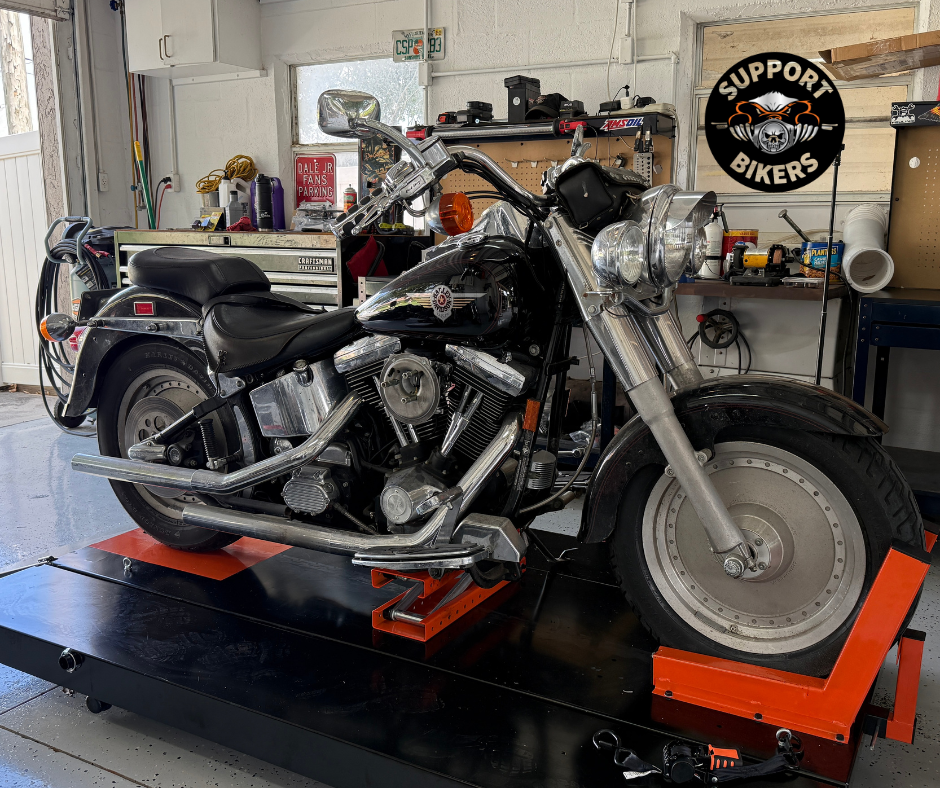
Preparing motorcycle for winter storage is essential to protect your bike from costly damage and ensure it’s ready to ride when spring arrives. Here’s what you need to do:
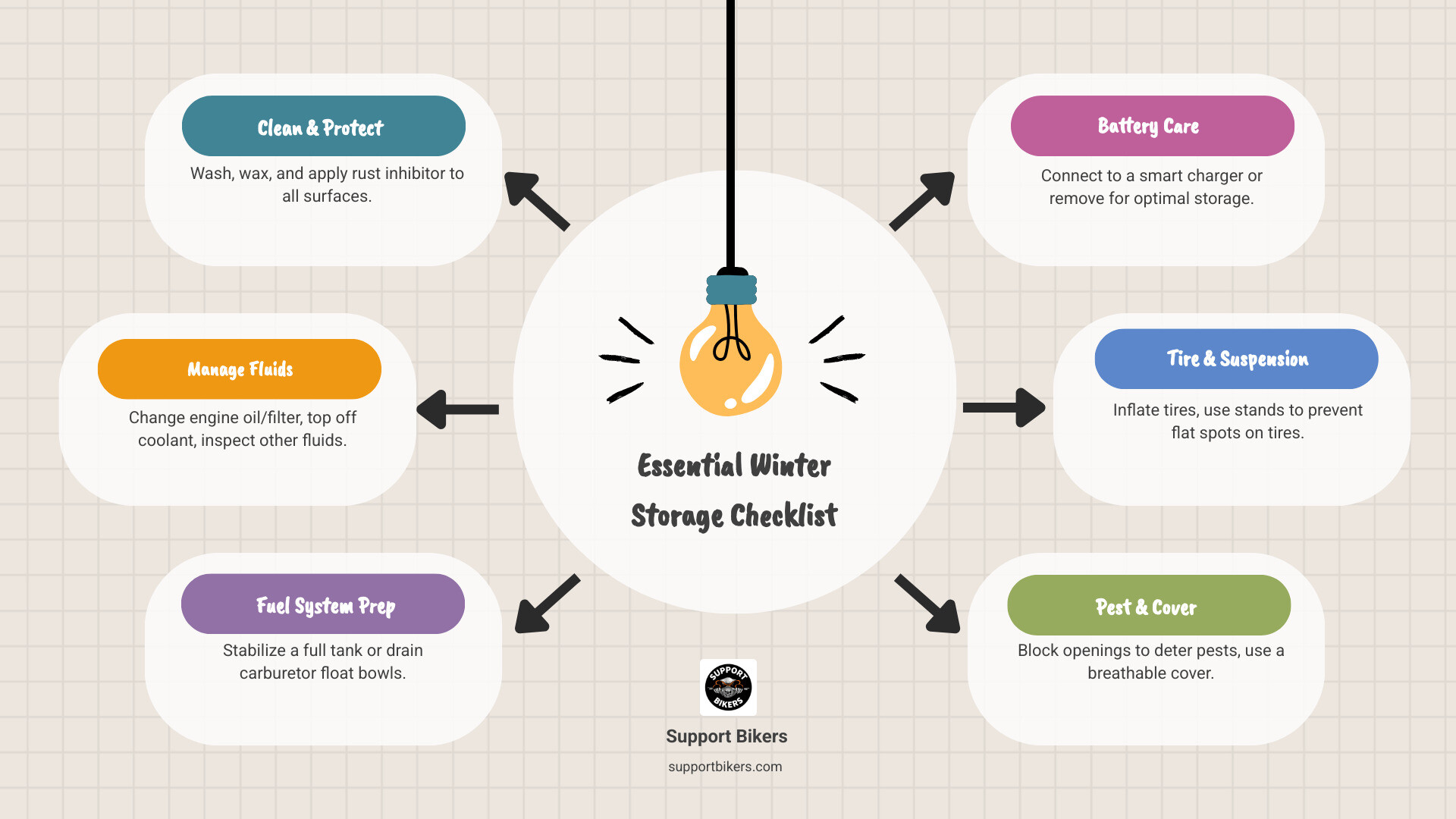
Quick Winterization Checklist:
- Clean and wax the entire motorcycle
- Change engine oil and filter
- Fill fuel tank and add stabilizer (or drain for carbureted bikes)
- Remove and charge battery monthly or use a trickle charger
- Inflate tires to max pressure or use stands
- Plug exhaust and air intakes against pests
- Cover with breathable fabric in a dry location
When temperatures drop, it’s tempting to just park your bike and walk away. But improper storage can lead to rusted fuel tanks, clogged carburetors, dead batteries, flat-spotted tires, and even engine damage. Beyond mechanical issues, industry data shows that 25% of all motorcycle thefts occur during winter when bikes sit unprotected. A few hours of preparation now saves you hundreds or thousands of dollars in repairs and means you’ll be ready to ride the moment the weather breaks.
I’m Sonny Da Badger, and I’ve been riding since I was 6. During my time at Black Widow Harley Davidson, I learned how proper winterization protects your investment. Over years of preparing motorcycle for winter storage, I’ve seen what works and what doesn’t—and I’m here to share that knowledge with you. This guide walks you through every step, from cleaning and fluid changes to battery care and finding the right storage location.
The Consequences of Improper Storage
Neglecting your motorcycle during the off-season can turn your ride into a costly headache. Here are the main risks:
- Corrosion and Rust: Moisture from temperature changes causes condensation, leading to rust on chrome, the frame, and inside the fuel tank. Used oil also contains corrosive acids that can etch internal engine parts.
- Fuel System Clogs: Ethanol-blended fuels absorb water. If left untreated, the fuel can degrade and leave gummy deposits that clog fuel lines, carburetors, and injectors, leading to poor performance.
- Dead Battery: Batteries self-discharge, and cold accelerates this process. An unattended battery will likely be dead and possibly damaged beyond repair by spring.
- Flat-Spotted Tires: The bike’s weight can cause permanent flat spots on tires when it sits for months, resulting in a bumpy ride and the need for expensive tire replacement.
- Pest Infestation: Exhaust pipes and airboxes are inviting nesting spots for pests, who can damage wiring, filters, and other components.
- Costly Spring Repairs: These issues add up to hundreds or thousands of dollars in spring repairs. A little effort now saves significant money and frustration later.
When to Store Your Motorcycle
The ideal time to store your bike depends on your local climate. Generally, when temperatures consistently drop below 40-50°F (4-10°C) or when ice and snow become a risk, it’s time. Many riders use the first hard frost as their cue.
In some regions, like Quebec, Canada, there may be specific deadlines for storing your vehicle to receive registration reimbursements. Always check with your local motor vehicle agency for regional regulations. Even if you’re not riding, maintaining comprehensive insurance is crucial, as your bike is still vulnerable to theft or damage.
The Essential Pre-Storage Preparation Checklist
Now that you understand why winterization matters, let’s get to work. This section covers the critical maintenance tasks that’ll keep your bike healthy all winter long.
Step 1: A Deep Clean and Corrosion Prevention
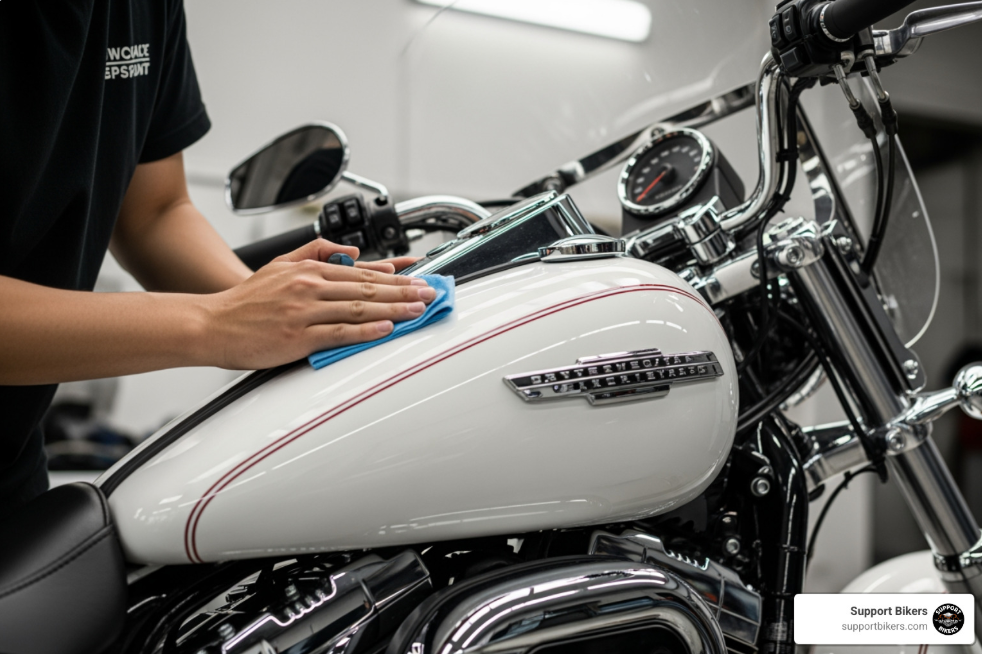
Cleaning your bike before storage is crucial, as road grime, bug splatter, and salt residue can eat away at your paint and chrome. Start with a thorough wash, paying special attention to dead bugs, whose acidic remains can etch paint. Dry the bike completely to prevent water spots and corrosion.
Next, apply a quality wax to painted surfaces to create a moisture barrier. Use a rust inhibitor or chrome polish on metal parts to prevent pitting, which is expensive to fix. Clean and condition any leather seats or saddlebags to prevent them from drying and cracking. Finally, grease your external components like levers, pivots, and linkages to prevent seizing.
Step 2: Fluid Management for Hibernation
Managing your motorcycle’s fluids before storage is key to ensuring it’s ready to ride in the spring.
Changing your engine oil and filter is absolutely non-negotiable when preparing motorcycle for winter storage. Used oil contains contaminants and acids that corrode internal engine components. Fresh oil provides a protective coating. After the oil change, run the engine for a few minutes to circulate the new oil.
For liquid-cooled bikes, check your coolant level and concentration to prevent freezing and internal corrosion. If it’s over two years old (or 24,000 miles), now is the perfect time to replace it. For long-term storage (6+ months), some mechanics suggest draining the system completely, but be sure to tag it with a reminder to refill it in spring.
Brake and clutch fluids also absorb moisture, which can cause internal corrosion. If it’s been two years (or 12,000 miles) since your last flush, consider replacing them. Be careful, as brake fluid can damage paint.
For more detailed maintenance guidance year-round, check out our motorcycle maintenance resources.
Step 3: Fuel System Preparation (Full vs. Empty)
The correct fuel system preparation depends on whether your bike is fuel-injected or carbureted. Getting this wrong can lead to clogged jets or a rusty tank.
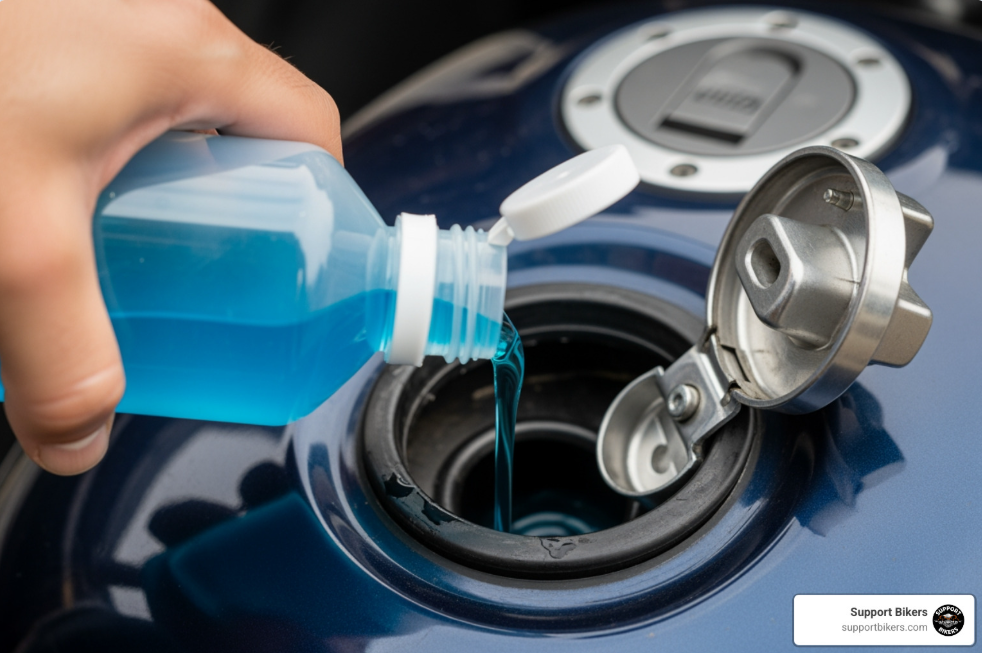
For fuel-injected motorcycles, fill the tank completely. A full tank minimizes air space, reducing the chance of condensation and rust. Add a high-quality fuel stabilizer, then run the engine for about 15 minutes to circulate the treated fuel through the entire system.
Carbureted bikes need a different approach. Old fuel in carburetors leaves gummy deposits that clog jets. Your best bet is to either run the engine until it’s out of fuel or manually drain the carburetor float bowls. If you drain the tank, consider spraying the inside with a fuel-soluble anti-rust agent. Alternatively, you can fill the tank with non-oxygenated fuel and stabilizer, but you must still drain the float bowls.
Here’s a quick comparison to keep things straight:
| Feature | Carbureted Motorcycles | Fuel-Injected Motorcycles |
|---|---|---|
| Fuel Tank Level | Empty or full with stabilizer & non-oxygenated fuel | Full with stabilizer |
| Fuel Stabilizer | Recommended if not fully drained | Essential |
| Carburetor Draining | Highly recommended to prevent clogs | Not applicable |
| Primary Concern | Gumming/varnish in carburetors, internal tank rust if empty | Internal tank rust from condensation, fuel degradation |
Step 4: Battery Care and Maintenance
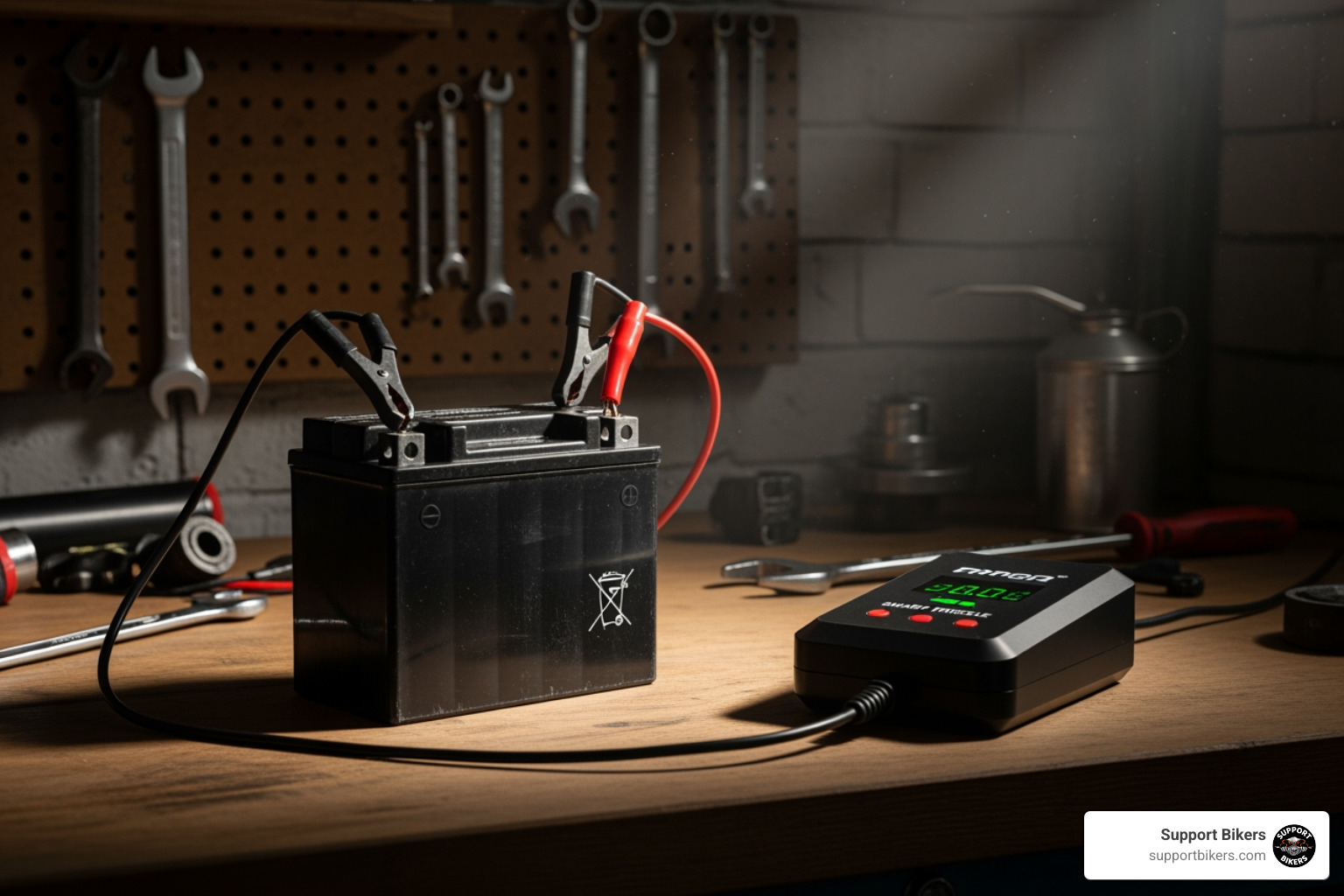
A dead battery is the most common post-storage problem, but it’s also the easiest to prevent.
Pull the battery out of your bike. Modern bikes have small parasitic drains that will deplete it over winter. If you can’t remove it, at least disconnect the negative cable. Clean the terminals and store the battery in a dry, room-temperature location (off cold concrete floors).
The key to battery longevity is a smart battery tender or trickle charger. These devices maintain the optimal voltage without overcharging, extending your battery’s life. A tender is a worthwhile investment; just connect it and leave it. If you have a traditional lead-acid battery, check electrolyte levels and top off with distilled water if needed. Without a tender, you must manually charge the battery once a month.
Honda has put together an excellent resource that covers these steps and more in their detailed storage guide—it’s worth a read even if you don’t ride a Honda.
Your Step-by-Step Guide to Preparing Motorcycle for Winter Storage
With the maintenance done, here’s how to set your bike up in its final resting spot for the winter.
Step 5: Tire and Suspension Care
Protecting your tires and suspension during storage is vital to avoid damage and ensure a smooth ride next season.
- Preventing Flat Spots: Tires can develop permanent flat spots if left weighted in one position for an extended period. To prevent this, we have a few recommendations:
- Inflating Tires to Max Recommended Pressure: Inflate your tires to their maximum recommended pressure as indicated on the tire sidewall (not the bike’s manual, which lists riding pressure). This helps them hold their shape better. Remember to reduce the pressure to riding levels before your first ride in spring.
- Using Motorcycle Stands: The best solution is to use front and rear paddock stands, or a center stand, to lift both wheels completely off the ground. This takes all pressure off the tires and suspension components.
- Elevating Wheels off Concrete: If you can’t lift the entire bike, at least place a mat, carpet, or pieces of plywood under the tires to insulate them from the cold, damp concrete, which can draw moisture and deteriorate rubber.
- Rotating Wheels Periodically: If lifting the bike isn’t an option, roll the bike a few feet forward or backward every month or so to change the contact patch.
Step 6: Pest and Rodent Protection
Winter is when rodents and insects look for warm, sheltered places to nest, and your motorcycle’s openings can be very appealing.
- Blocking Exhaust Pipes: Use steel wool (which rodents can’t easily chew through) or specialized exhaust plugs to block the openings of your exhaust pipes. This prevents critters from building nests inside, which can cause blockages and damage.
- Covering Air Intake: Similarly, cover your air intake openings with a rag or tape to prevent pests from entering the airbox and potentially damaging the air filter or wiring.
- Mothballs or Rodent Repellents: Strategically placing mothballs around the motorcycle (but not directly on painted surfaces) can deter rodents with their strong odor. Alternatively, commercial rodent repellents can be used.
- Keeping Storage Area Clean of Food: A clean storage area free of food scraps is your first line of defense against attracting pests in the first place.
Step 7: Choosing the Right Motorcycle Cover
The right cover protects your motorcycle from dust, debris, and moisture while it’s stored. The wrong cover can do more harm than good.
- Breathable Fabric is Key: We strongly recommend using a cover made from breathable fabric. This allows air to circulate, preventing moisture and condensation from getting trapped underneath, which can lead to rust and mildew.
- Dangers of Plastic Tarps: Avoid using non-breathable plastic tarps or cotton sheets. These trap humidity and moisture against the motorcycle’s surfaces, creating a damp environment that promotes corrosion and can damage paint.
- Indoor vs. Outdoor Covers: If you must store your bike outdoors (though not ideal), invest in a high-quality, waterproof, and breathable outdoor cover designed for motorcycles. For indoor storage, a lighter, breathable dust cover is usually sufficient.
- Ensuring a Proper Fit: A cover that fits well will stay in place and offer better protection. It should protect against dust and debris without being so tight that it traps moisture or rubs against painted surfaces.
Finding the Ideal Storage Location and Ensuring Security
Where you store your bike is as important as how you prepare it. The wrong environment can cause serious issues even on a well-prepped motorcycle.
Ideal Storage Conditions and Locations
A heated garage is the gold standard. Its stable, moderate temperature prevents freezing and minimizes condensation, protecting every component from the cold.
Climate-controlled storage units are the next best option. They maintain stable temperature and humidity, preventing rust and moisture buildup. Many riders find them worth the cost for peace of mind.
If your only option is an unheated shed or garage, ensure the space is as dry and well-ventilated as possible. Keep the bike on stands and away from chemicals or fire hazards. With proper prep, this can work.
Outdoor storage is the last resort when preparing motorcycle for winter storage. It exposes your bike to extreme weather and high risks of theft. If you must, use a high-quality, waterproof, breathable outdoor cover, secure the bike with locks, and check on it frequently.
Winter Motorcycle Security
Thieves don’t hibernate; in fact, winter is a prime time for motorcycle theft. The National Insurance Crime Bureau reports that 25% of all motorcycle thefts happen during winter months because bikes sit unattended for long periods.
A sturdy lock is non-negotiable, even in a locked garage. Use a disc lock, heavy-duty chain, or an anchoring system to secure the bike to a fixed object. These are cheap insurance against opportunistic thieves.
If your bike has an alarm or GPS tracker, ensure it’s armed. For garage storage, a security camera or a secure garage door adds another layer of deterrence.
Maintaining comprehensive insurance coverage is your ultimate safety net. It protects against theft, fire, and other non-riding damage. Ask your provider about “storage” or “laid-up” policies, which can save you money while keeping your investment protected.
Frequently Asked Questions about Preparing Motorcycle for Winter Storage
We often hear similar questions from riders as the cold weather approaches. Here are some of the most common ones we address when preparing motorcycle for winter storage.
Should I keep my motorcycle insurance active during winter storage?
Yes. Canceling your insurance over winter can be a costly mistake. Here’s why:
- Protection from Non-Riding Risks: Even when parked, your bike is vulnerable to theft, fire, vandalism, and other damage. Comprehensive coverage protects your investment.
- Liability-Only is Insufficient: Liability insurance won’t cover damage to your own bike. You need comprehensive coverage for a stored motorcycle.
- Ask About “Storage” Policies: Many insurers offer reduced-premium “storage” or “laid-up” policies that maintain fire and theft protection. This is more economical than canceling and restarting your policy and ensures continuous coverage.
How often should I start my motorcycle in the winter?
Our advice is clear: avoid starting your motorcycle periodically during winter storage. If it’s properly winterized, there’s no need.
- It Causes Condensation: Short runs don’t let the engine get hot enough to burn off moisture from combustion. This moisture condenses inside the engine and exhaust, causing rust.
- It Drains the Battery: The starting process uses more power than a short, idle run can replenish.
- It Does More Harm Than Good: A properly prepped bike is in a state of “hibernation.” Disturbing it without a full ride to burn off moisture is counterproductive.
What are the top mistakes to avoid when preparing motorcycle for winter storage?
Knowing the “don’ts” is just as important as the “dos.” Avoid these common mistakes:
- Storing It Dirty: Dirt, bugs, and road grime can etch paint and accelerate corrosion.
- Forgetting Fuel Stabilizer: This can lead to fuel degradation and clogged fuel systems, resulting in costly repairs.
- Letting the Battery Die: Neglecting your battery is a surefire way to need a replacement in the spring. Use a battery tender.
- Using a Non-Breathable Cover (Tarp): A plastic tarp traps moisture, creating a perfect environment for rust and mildew.
- Not Protecting Against Pests: Unplugged exhausts and air intakes are an open invitation for rodents and insects to build nests.
Conclusion: A Ready-to-Ride Spring
When spring finally breaks and that first warm Saturday morning calls your name, there’s nothing quite like the feeling of walking into your garage knowing your bike is ready to go. That’s the real reward of preparing motorcycle for winter storage properly—not just avoiding problems, but earning that moment of pure anticipation before your first ride of the season.
By taking the time now to clean, maintain, and protect your motorcycle, you’re making an investment in countless future rides. You’re protecting the machine that gives you freedom, adventure, and those perfect moments on the open road. More importantly, you’re saving yourself from the frustration of finding a dead battery, corroded fuel system, or rusted components when you’re itching to ride.
The steps we’ve covered—from that deep clean and fresh oil change to battery care and proper covering—might seem like a lot of work at first. But most riders find they can complete the entire process in a single afternoon. And that small time investment now prevents hundreds or thousands of dollars in repairs later. It’s really that simple.
At Support Bikers, we understand that your motorcycle represents more than just transportation. It’s your escape, your passion, and sometimes your most prized possession. That’s why we’re committed to connecting riders like you with the knowledge, resources, and community support you need to keep riding safely season after season. We’re bikers helping bikers, because we’ve all been there.
Winter storage is just one aspect of motorcycle ownership, but it’s a crucial one. And while we hope you never face trouble on the road, our community stands ready to support you when you need it most. Whether you’re dealing with the aftermath of an accident or simply need help navigating the recovery process, we’re here for you.
Here’s to a worry-free winter and an incredible riding season ahead. Stay safe out there, and we’ll see you on the road when the snow melts.
Get help if you’re in an accident through our Wrecked Rider Fund




0 Comments