
Motorcycle engine tuning: 10 Powerful Tips for Best Results 2025
Open uping Your Bike’s Hidden Potential
Motorcycle engine tuning is the process of optimizing your engine’s performance by adjusting key components and parameters. If you’re looking to improve your motorcycle’s performance, here’s what you need to know:
- Basic Definition: Adjusting your motorcycle’s engine parameters to improve power, efficiency, and responsiveness
- Main Types: Tune-ups (maintenance), Performance tuning (modifications), ECU tuning (electronic), Carburetor tuning (mechanical)
- Primary Benefits: Increased horsepower (up to 40% in some cases), better fuel economy, smoother throttle response, extended engine life
- When Needed: After modifications, poor performance symptoms, or at regular maintenance intervals
The beauty of a perfectly tuned motorcycle engine is something every rider should experience. Whether you’re looking for more power, better fuel efficiency, or simply a smoother ride, proper engine tuning can transform your motorcycle’s performance. Think of tuning as bringing your engine into harmony – each component working together to create the perfect balance of power and efficiency.
As Keanu Reeves once said, “When I don’t ride a motorcycle, I go through withdrawal.” The same can be said for riding a poorly tuned bike versus one that’s been optimized to its full potential. The difference is night and day.
I’m Sonny Da Badger, and I’ve been involved with motorcycle engine tuning since receiving my first moped at age 6, progressing through dirt bikes to my current Harley Davidson CVOs, where I’ve learned the critical importance of proper motorcycle engine tuning for both performance and longevity.

Simple guide to Motorcycle engine tuning:
– Custom motorcycle builders
– Motorcycle repair shops
– Motorcycle safety courses
Understanding Motorcycle Engine Tuning
When I talk about motorcycle engine tuning, I’m really talking about creating harmony between all the parts that make your bike run. Think of it as an orchestra where every instrument needs to play in perfect sync to create beautiful music. The star of this show? The combustion process – that controlled explosion happening thousands of times per minute inside your engine.
The magic behind great tuning comes down to how well your engine breathes, something engineers call volumetric efficiency. To put this in perspective, a stock 1000cc sportbike typically puts out around 125 horsepower. But with proper race tuning? That same engine can release a whopping 175 horsepower – that’s a 40% boost in power! Pretty impressive, right?
What makes this possible isn’t just one magic trick, but how everything works together. It’s about improving the way air and fuel enter your engine, how efficiently they burn, and how cleanly the exhaust gases exit. When these elements dance together perfectly, your bike transforms.
When we’re tuning for performance, we’re really focused on three main things:
Horsepower is what gives your bike its top-end speed potential – think of it as your motorcycle’s ability to do work quickly.
Torque is that push-you-back-in-your-seat feeling of acceleration – the rotational force that gets you moving.
Fuel Efficiency determines how far you can go on a tank – how effectively your engine converts fuel into usable power rather than wasting it.
Scientific research on cylinder head gas flow has shown something fascinating: increasing the downdraft angle through porting can dramatically improve how your engine breathes by directing the fuel/air mixture more steeply into the combustion chamber. This creates more complete combustion and translates directly to more power under your right wrist.
Why Tuning Matters for Power & Life Span
Motorcycle engine tuning isn’t just about chasing horsepower – it’s about giving your bike a longer, healthier life. I’ve seen countless engines prematurely worn because they weren’t properly tuned.
A well-tuned engine experiences significantly reduced engine wear because everything works with less friction and stress. Components last longer when they’re not fighting against each other.
You’ll also notice smoother throttle response – gone are those annoying hesitations and flat spots in power delivery that make riding less enjoyable.
Believe it or not, proper tuning also creates improved emissions because better combustion means fewer unburned hydrocarbons polluting the air. And who doesn’t want improved fuel economy? A properly tuned motorcycle can boost fuel efficiency by 10-15%, keeping more money in your pocket at the pump.
The risks of poor tuning are real. Run too lean (not enough fuel), and combustion temperatures skyrocket, potentially leading to detonation that can punch holes in pistons or burn valves. Run too rich (too much fuel), and you’ll deal with carbon buildup, fouled spark plugs, and wasted gas.
As my old tuning mentor used to say, “Tuning works best when everything plays nicely together, not when you throw random parts at a bike.” That holistic approach ensures all systems complement rather than fight each other.
Core Elements: Air, Fuel, Spark, Compression
The heart of motorcycle engine tuning revolves around what I call the combustion quartet – four elements that must work in perfect harmony:
The Air Delivery system determines how effectively oxygen reaches your engine. This includes your air filter’s condition, airbox modifications, intake tract design, and any velocity stacks or ram air systems you might have installed.
Fuel Delivery manages how precisely fuel mixes with that air. On carbureted bikes, we’re talking about jets and needles. On fuel-injected machines, it’s injector size, spray patterns, and fuel pressure. The goal is hitting the right air/fuel ratio – around 14.7:1 for efficiency or a richer 12.5:1 for maximum power.
Spark Timing controls when that magical spark ignites the mixture. Getting this right involves setting the ignition advance curve, choosing the correct spark plug heat range and gap, and ensuring your ignition coils deliver consistent energy.
Compression determines how tightly the air-fuel mixture is squeezed before ignition. This includes your static compression ratio, dynamic compression (affected by cam timing), combustion chamber shape, and piston design.
The tricky part? Changing any one element requires adjusting the others. Add a high-flow air filter, and you’ll likely need more fuel to maintain the proper mixture. Raise compression, and you’ll need to adjust ignition timing to prevent engine-damaging detonation.

Types of Tuning & When to Use Them
Ever wonder why some bikes seem to purr while others just lumber along? The secret often lies in the type of motorcycle engine tuning that’s been applied. Not all tuning approaches are created equal, and choosing the right one can make the difference between a good ride and a great one.
Let’s break down the main differences between carbureted and fuel-injected motorcycles when it comes to tuning:
| Aspect | Carbureted Motorcycles | Fuel-Injected Motorcycles |
|---|---|---|
| Tuning Method | Jet changes, needle adjustments | ECU remapping, piggyback controllers |
| Complexity | Mechanical knowledge required | Software and electrical knowledge needed |
| Tools Needed | Screwdrivers, wrenches, feeler gauges | Computer, interface cable, diagnostic software |
| Cost | $50-200 for parts | $300-900 for professional tuning |
| DIY Potential | High (with proper knowledge) | Moderate to low (depends on bike) |
| Precision | Manual adjustments, trial and error | Data-driven, precise fuel mapping |
| Adaptability | Limited to fixed jet sizes | Infinitely adjustable fuel maps |
Basic Tune-Up vs Full Performance Build
Think of a basic tune-up as giving your bike a wellness check, while a performance build is more like training for a triathlon. They serve different purposes, and your goals will determine which path to take.
A basic tune-up focuses on maintenance that keeps your bike running as the factory intended. This includes changing your oil and filter, adjusting valve clearance, replacing spark plugs, cleaning your air filter, maintaining your chain, and synchronizing carburetors if applicable. It’s the motorcycle equivalent of a regular health check-up – not glamorous, but essential.
These basic services typically run between £50 and £200, depending on your bike model and what needs doing. If you’re a weekend warrior, aim for this level of maintenance at least once a year. Ride more often? Schedule it more frequently.
On the flip side, a performance build takes your bike beyond stock specifications. This might include upgrading camshafts for better breathing, installing high-compression pistons to extract more power from each combustion cycle, porting cylinder heads for improved flow, balancing and strengthening the crankshaft, upgrading cooling systems, and optimizing the exhaust.
Performance builds vary wildly in scope and cost – anywhere from $1,000 for mild upgrades to $10,000+ for comprehensive race builds. Remember what one engine builder told me: “Ten individual parts each claiming a 10 hp gain won’t give you 100 hp more if they’re fighting each other.” A systematic approach is crucial, followed by professional tuning to make everything work together harmoniously.
ECU Flashing & Motorcycle Engine Tuning Maps
For modern fuel-injected bikes, ECU flashing has become the gold standard in motorcycle engine tuning. Think of your ECU as your bike’s brain – flashing it is like upgrading its operating system to think smarter and faster.
The benefits are substantial: removing those annoying factory restrictions (we all know manufacturers often detune bikes for regulatory reasons), smoothing out power delivery, optimizing fuel efficiency, accommodating aftermarket parts, and sharpening throttle response. The difference can be night and day.
When it comes to ECU maps, you have two main paths:
Preset maps are like off-the-rack suits – designed to fit most people reasonably well, but not perfectly. They’re pre-configured for common modifications like slip-on exhausts or air filters. They’re a good starting point but won’t account for the unique characteristics of your specific bike or riding environment.
Custom maps, on the other hand, are like bespoke tailoring – created specifically for your motorcycle on a dynamometer, taking into account all your modifications and local conditions. They provide superior results but at a higher cost.
It’s fascinating that some modern BMW motorcycles now feature self-tuning capabilities through onboard wideband O₂ sensors. These bikes continuously adjust fuel delivery for optimal performance as conditions change – pretty impressive technology!
For the DIY enthusiasts among us, software like TuneECU offers interfaces for many motorcycle brands, though support varies by manufacturer. For more information about Tune ECU, you can visit their official website. Just remember to check local regulations before modifying your ECU, as these changes may affect emissions compliance and warranty coverage.
Power Commander & Other Piggyback Modules
Not ready to permanently alter your bike’s ECU? Piggyback modules like the Dynojet Power Commander offer a less invasive alternative. These clever devices sit between your ECU and fuel injectors, intercepting and modifying signals to adjust fuel delivery without permanently changing your stock ECU.
I like to explain it this way: ECU flashing is like directly editing a photo’s raw data, while a Power Commander is like applying a filter that changes how the image looks without altering the original file. Both improve the result, but in different ways and with different levels of commitment.
The advantages of piggyback modules are compelling: they’re easily removable when warranty service is needed, sometimes transferable between bikes, adjustable without specialized equipment, and pose no risk of “bricking” your ECU.
A typical Power Commander setup runs around $500 for the hardware, plus whatever you’ll spend on dyno tuning. While that might seem steep, the performance gains and improved rideability make it worthwhile for many enthusiasts I’ve talked to.
At Support Bikers, we’ve watched countless riders transform their motorcycles with these systems. If you’re exploring options, our Motorcycle Parts directory can connect you with trusted suppliers throughout our network.
Dyno Tuning for Ultimate Precision
If you’re serious about getting the absolute best from your bike, there’s no substitute for professional dynamometer tuning. Dyno tuning is the pinnacle of motorcycle engine tuning precision – it’s where science meets art in the pursuit of perfect performance.
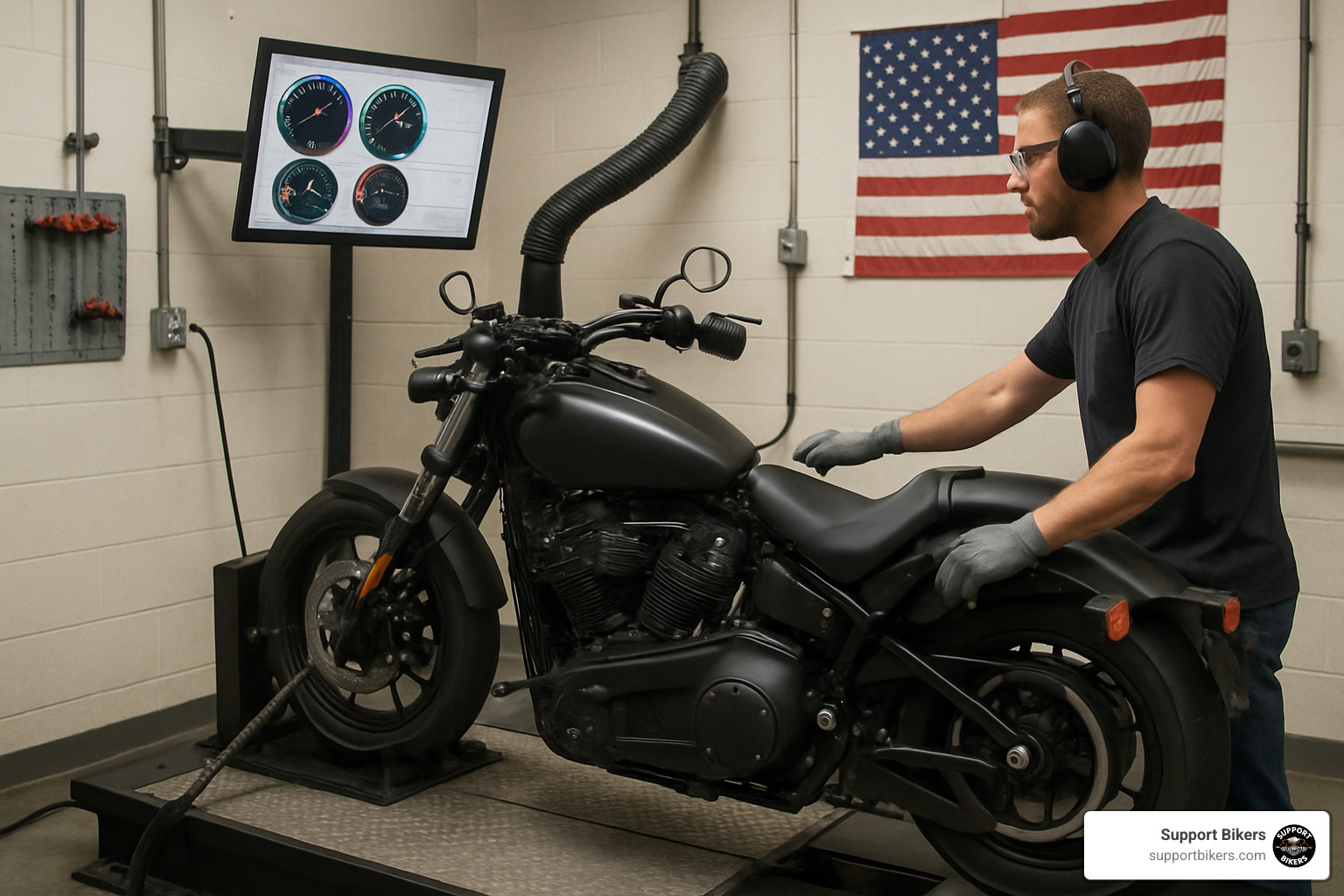
A typical dyno session is a fascinating process to watch. First, technicians make baseline runs to establish your bike’s current performance. Then they make incremental adjustments to fuel and ignition maps while monitoring air/fuel ratios in real-time through wideband O₂ sensors. They’ll account for temperature and environmental factors, and finally verify the improvements with confirmation runs.
The results can be remarkable: smoother throttle response that makes the bike feel more connected to your inputs, increased horsepower (typically 5-15% over stock), better fuel economy despite the power gains, elimination of potential detonation risks, and optimized performance throughout the entire RPM range.
Yes, dyno tuning is more expensive – typically $300-500 per session – but the results simply can’t be matched by other methods. If you’ve invested in significant engine modifications, professional dyno tuning isn’t just recommended, it’s essential for reliability and open uping the full potential of your build.
Signs You Need a Tune & Risks of Neglect
Your motorcycle has its own way of telling you when it needs attention. Much like how we feel sluggish when we’re not at our best, your bike displays symptoms that shouldn’t be ignored. Recognizing these warning signs early can save you from expensive repairs down the road and keep your rides enjoyable.
When your motorcycle starts acting up, it’s usually crying out for some motorcycle engine tuning love. Hard starting on cold mornings might seem like a minor inconvenience, but it’s actually your bike’s first plea for help. That rough, unstable idle that makes your bike feel like it’s about to stall at traffic lights? Another clear signal something’s not right in the combustion department.
Pay attention to those pops and bangs coming from your exhaust on deceleration. While some riders mistakenly think this sounds cool, it’s actually unburned fuel igniting in the exhaust system – a telltale sign your air-fuel mixture needs adjustment. If you’re making more frequent stops at gas stations or noticing black smoke billowing from your exhaust, your mixture is running too rich, wasting fuel and creating performance-robbing carbon deposits.
On the flip side, a motorcycle running too lean (not enough fuel) often overheats and feels hesitant when you twist the throttle. This condition is particularly dangerous as it can lead to serious engine damage in short order. That check engine light isn’t just there for decoration – it’s your bike’s computer telling you something specific needs attention.
Ignoring these symptoms isn’t just bad for performance – it can have serious consequences for your bike and wallet. Motorcycle engine tuning isn’t just about squeezing out more power; it’s about protecting your investment. Running improper air-fuel ratios can void your warranty faster than you can say “I didn’t know.” The excessive heat from a lean condition can burn valves, while a rich condition creates carbon buildup that gradually chokes your engine’s potential.
Perhaps the most frightening risk is what mechanics call a “lean seizure” – when inadequate fuel causes temperatures to spike so dramatically that your piston actually welds itself to the cylinder wall. I’ve seen engines destroyed in minutes from this condition, turning a simple tune-up into a complete engine rebuild.
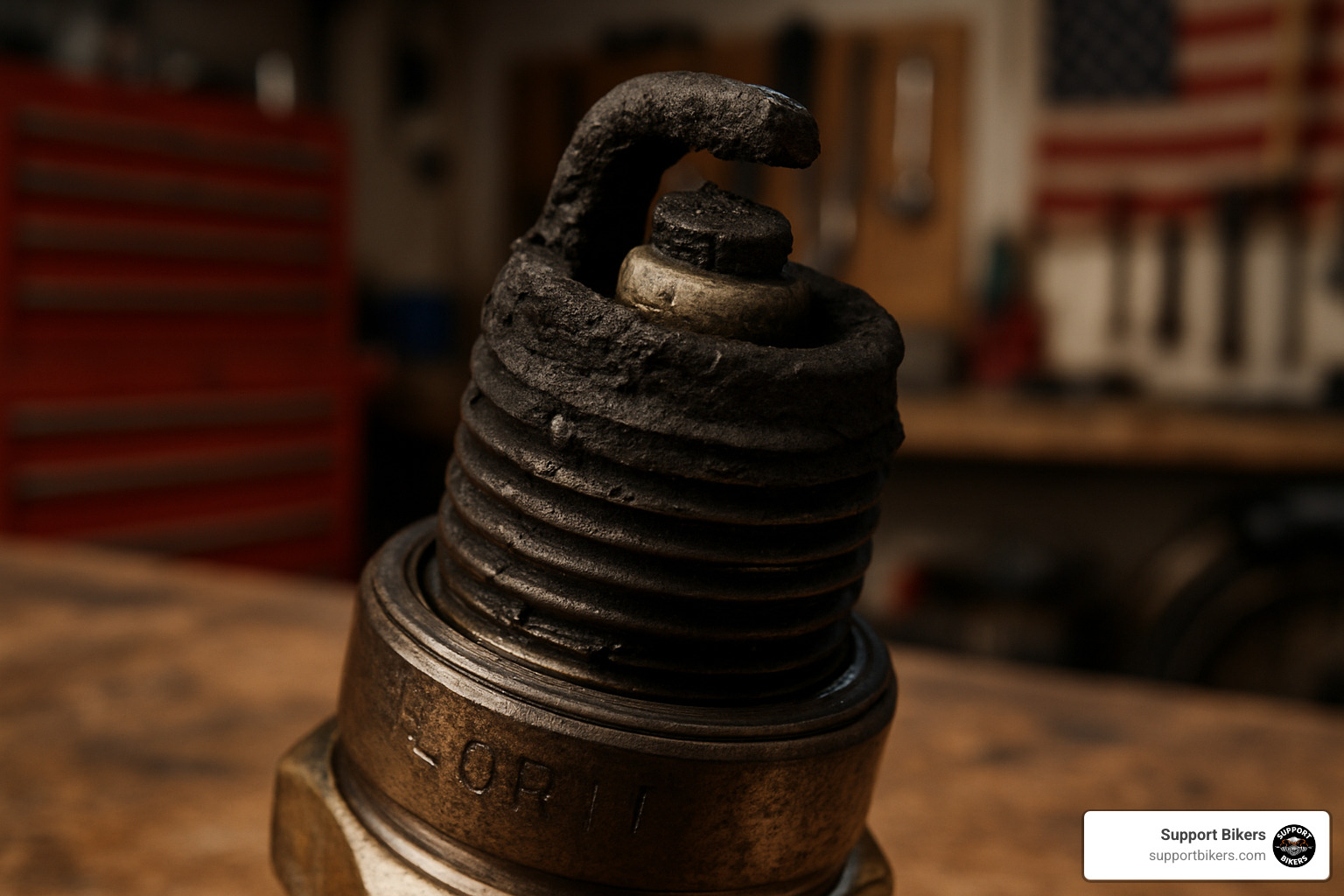
Your spark plugs tell a story about what’s happening inside your engine. A healthy plug should have light tan deposits – think the color of graham crackers. Black, sooty deposits mean you’re running rich, while white, chalky deposits suggest a dangerous lean condition. Taking a minute to check your plugs during routine maintenance can give you valuable insight into your engine’s health.
Modern motorcycles are sophisticated machines with interconnected systems. What starts as a minor tuning issue can cascade into multiple problems if left unchecked. Regular motorcycle engine tuning isn’t just maintenance – it’s preventative medicine that keeps your bike running at its best and protects your investment for years to come.
DIY Motorcycle Tune-Up: Tools, Steps, Safety
There’s something deeply satisfying about working on your own motorcycle. That feeling when you fire it up after a tune-up you did yourself? Priceless. But before you dive in, let’s make sure you’re properly equipped for the job.
Your toolbox should include the basics: a quality set of metric or SAE wrenches and sockets (depending on your bike’s origin), and a good torque wrench—this isn’t just a nice-to-have, it’s essential for preventing those “too tight” or “too loose” disasters. For precision work, you’ll need feeler gauges for valve adjustments and vacuum gauges if you’re syncing carburetors. If you ride a modern fuel-injected machine, an OBD scanner will help you speak your bike’s digital language.
Don’t forget the practical stuff—an oil drain pan, funnel, air compressor for tires, chain maintenance supplies, and a brake bleeding kit if you’re tackling those systems.
Safety isn’t just a suggestion when working with engines. Always wear safety glasses (trust me, getting oil or cleaner in your eye is no fun), and nitrile gloves to protect your hands from harsh chemicals and hot parts. Make sure your workspace has good ventilation—exhaust and chemical fumes are no joke. Your bike needs to be stable too, so invest in a proper motorcycle lift or sturdy stand.
“I once saw a guy try to balance his Harley on milk crates while doing an oil change,” a veteran mechanic told me. “That ended with a tipped bike, oil everywhere, and a cracked engine case. Don’t be that guy.”
Before starting any work, ensure your motorcycle is completely cool, stable, and if you’re working on electrical components, disconnect that battery! Your service manual is your best friend here—it has all the specifications and procedures specific to your model.
Not confident in your wrenching skills yet? No shame in that. Our Motorcycle Maintenance & Repair directory can connect you with qualified pros who’ll treat your bike right.
Step-By-Step Checklist
A proper motorcycle engine tuning session follows a logical sequence. Here’s how to approach it:
Start with preparation—give your bike a good cleaning so you can spot leaks or issues more easily. Gather all your tools and replacement parts before you begin, and keep that service manual handy for reference.
For the air filter service, remove the airbox cover carefully and inspect your filter. A clogged filter chokes your engine, while a torn one lets dirt in—both bad news. Clean reusable filters according to instructions or replace paper ones, and check the airbox for debris while you’re in there.
When changing oil, warm the engine for 5-10 minutes first—warm oil flows better and carries more contaminants out. Once drained completely, replace the filter and crush washer (reusing these is false economy). Fill with the manufacturer-recommended oil type and weight, then run the engine briefly to check for leaks.
Valve clearance checks require patience and precision. Remove the valve covers, rotate the engine to the specified position, and measure clearances with feeler gauges. If they’re outside specs, adjust accordingly. This seemingly small detail can dramatically improve how your engine runs and how long it lasts.
Spark plugs tell a story about your engine’s health. Remove them carefully, check for proper gap and condition, and replace if worn or fouled. When reinstalling, torque them precisely—too tight can damage threads, too loose causes performance issues.
Don’t neglect your chain—clean it thoroughly, check for tight spots or excessive wear, lubricate properly, and adjust tension to specification. A well-maintained chain transfers power efficiently and lasts much longer.
For carbureted bikes, synchronizing the carburetors ensures smooth running. Connect vacuum gauges to intake ports and adjust the sync screws until readings are balanced across all cylinders. This eliminates that annoying surging feeling at steady throttle.
Finish with a thorough inspection of all fasteners, tire pressure, and electrical systems. A careful road test will confirm your improvements and highlight any areas needing further attention.
The DIY approach typically costs $50-$100 for parts versus $300-$900 for professional service. Your time investment will be 3-6 hours, but the satisfaction and knowledge gained are invaluable.
Common Mistakes to Avoid
Even experienced mechanics make errors during motorcycle engine tuning. Being aware of these common pitfalls can save you time, money, and potentially your engine:
Overtightening fasteners is probably the most common mistake I see. That cylinder head bolt or oil drain plug doesn’t need your full strength—it needs precise torque. Invest in a good torque wrench and use it religiously.
Many riders skip proper warm-up before working on their bikes. Engine oil needs to be warm for proper draining, and valve clearances should be checked at operating temperature for accuracy. Patience here pays dividends.
Your service manual exists for a reason. I’ve seen countless riders ignore manufacturer specifications for clearances, torque values, and procedures—only to wonder why their “improvements” made things worse.
Setting incorrect spark plug gaps is another frequent error. A gap that’s too wide or too narrow affects ignition efficiency and can cause misfires or poor running. Take the time to measure and set it properly.
Making air/fuel adjustments based on symptoms without verification is like prescribing medicine without a diagnosis—potentially dangerous. Use proper testing equipment or seek professional help for these critical adjustments.
Safety should never take a backseat to convenience. Fuel is flammable, batteries can spark, and chemicals can burn skin. One moment of carelessness can lead to injury or worse.
Rushing through maintenance jobs almost always leads to overlooked problems or new issues. Take your time, be methodical, and enjoy the process. Motorcycling isn’t just about the ride—it’s about the relationship you build with your machine.
Motorcycle manufacturers design their engines with specific tolerances and operating parameters. While tuning can certainly improve performance, radical departures from these specifications often reduce reliability and longevity.
A well-maintained motorcycle not only performs better but is safer and more reliable—something every rider can appreciate. Whether you’re a weekend warrior or daily commuter, taking care of your bike means it will take care of you when you need it most.
Advanced Motorcycle Engine Tuning Techniques
For riders who crave that extra rush of power, advanced motorcycle engine tuning techniques can open up your bike’s hidden potential. These modifications go well beyond basic adjustments and fundamentally transform your engine’s performance characteristics.

When you’re ready to push the boundaries, consider exploring forced induction options like boostrs and turbochargers. These systems compress the intake air, allowing more fuel to be burned with each combustion cycle. The result? Dramatic power increases that can transform your riding experience. Just remember, you’ll need extensive ECU tuning to manage the increased fuel delivery, and often a lower compression ratio to prevent engine-damaging detonation.
Big-bore kits offer another path to performance by increasing your cylinder displacement through larger bores or longer strokes. This raises your engine’s potential output, but requires comprehensive tuning to dial in the perfect air/fuel ratio and ignition timing for the new displacement. The difference in throttle response and acceleration can be remarkable when properly executed.
For those who hit the track regularly, race fuel tuning opens up new possibilities. High-octane racing fuels allow for more aggressive ignition timing without the risk of detonation, yielding substantial power gains. The downside? Engines tuned specifically for race fuel often run poorly on regular pump gas, making them less practical for everyday street riding.
Environmental factors play a bigger role in engine performance than many riders realize. For every 1,000 feet you climb in elevation, your engine needs approximately 3% less fuel due to the reduced air density. Similarly, a 10°F increase in air temperature typically requires about 1% less fuel for optimal combustion. Advanced ECU tuning can incorporate sensors to automatically adjust for these variables, ensuring peak performance regardless of conditions.
These advanced techniques typically require specialized knowledge and equipment, so they’re best left to professional tuning shops with experience in high-performance motorcycles. Your local mechanic might be great for basic maintenance, but advanced tuning is a specialized art form.
Custom Motorcycle Engine Tuning for Mods
That shiny new exhaust or high-flow air filter you just installed? It’s probably not delivering its full potential without proper motorcycle engine tuning. Most aftermarket modifications require custom tuning to realize their true benefits.
When you install a full exhaust system, you’re dramatically changing your bike’s breathing characteristics. That increased exhaust flow typically requires 10-15% more fuel to maintain the proper air/fuel ratio. Your ignition timing often needs advancement too, and those factory restrictions in the ECU? They’ve got to go. Without these tuning adjustments, you might actually lose power or, worse, risk engine damage from running too lean.
High-flow air intakes similarly alter your bike’s airflow characteristics and volume. They typically need a 5-8% enrichment of the fuel mixture to compensate. These intakes can sometimes create turbulence that affects airflow sensor readings, requiring additional tuning finesse. Many riders are surprised by how much more responsive their bike feels when properly tuned after an intake upgrade.
Camshaft changes represent one of the most significant modifications, altering valve timing, lift, and duration. These changes shift your power band (typically higher in the RPM range) and require substantial fuel map adjustments across the entire RPM spectrum. You’ll often need idle speed and cold start enrichment modifications too. A well-tuned cam upgrade can transform your bike’s character completely.
Custom maps become essential when you’ve installed multiple modifications together, when you’re building a race-specific application, or when you regularly ride at extreme altitudes or temperatures. They’re also crucial for addressing specific drivability issues or extracting maximum power from your modifications.
Just remember that modifications and tuning can affect both warranty coverage and emissions compliance. In many regions, modifications that alter emissions are technically illegal for street use, even if enforcement varies. Always research local regulations before making significant changes to your motorcycle’s engine or exhaust system.

Cost & Frequency Breakdown
Understanding what motorcycle engine tuning costs and how often you’ll need it helps you budget appropriately for both maintenance and performance improvements.
Basic tune-up parts for the DIY enthusiast typically run between $50-$100, covering essentials like oil, filter, spark plugs, and air filter. If you prefer leaving it to the professionals, expect to pay $300-$900 depending on your bike model and the work needed. Most bikes benefit from a tune-up every 5,000-10,000 miles or at least once annually—more frequently if you ride a high-performance machine or have significant modifications.
When it comes to performance tuning, the investment increases with your ambitions. An ECU flash or remap typically costs $300-$600 as a one-time expense (unless you change modifications later). A Power Commander or similar piggyback module runs $400-$700 including installation, while a proper dyno tuning session ranges from $300-$500 for a typical 2-3 hour appointment. Custom map development adds another $200-$400 to that dyno time.
For the truly performance-obsessed, advanced engine building starts around $2,000 and can easily exceed $10,000 depending on how exotic your modifications become. The gains can be substantial, but so is the investment.
“I spent $600 on a dyno tune after installing my exhaust and intake,” shares veteran rider Mike from Colorado. “It seemed expensive until I felt the difference—smoother power delivery, better throttle response, and about 12 more horsepower. Money well spent.”
You can save some cash by learning basic maintenance to handle routine tune-ups yourself. Joining owner groups also helps by letting you share knowledge and experiences with fellow riders. When planning modifications, think strategically—install components in logical groups to minimize repeated tuning sessions. And if you own multiple bikes, consider investing in a handheld tuner that can work across your fleet.
Proper maintenance and tuning are investments in your motorcycle’s longevity and performance. Skimping on these essentials often leads to more expensive repairs down the road, not to mention a less enjoyable riding experience.
Looking for qualified professionals to handle your motorcycle’s tuning needs? Support Bikers’ directory can connect you with experienced technicians who specialize in performance optimization.
Frequently Asked Questions about Motorcycle Engine Tuning
How much horsepower can a tune add?
“How much power will I get?” might be the most common question I hear at rallies and bike nights. The truth is, the gains from motorcycle engine tuning vary dramatically depending on what you’re starting with.
For a bone-stock motorcycle with just an ECU flash, you’re typically looking at modest but noticeable gains of 3-5% – that’s about 3-5 horsepower on a 100hp bike. Not earth-shattering, but enough to feel the difference in responsiveness.
Where tuning really shines is when you’ve already made some modifications. Add an aftermarket exhaust and high-flow air filter, and a good tune can open up 7-12% more power. The reason is simple – those parts improve flow, but without proper fueling to match, your bike can’t take advantage of them.
For riders going all-in with comprehensive modifications, the sky’s the limit. A 1000cc sport bike making 125hp stock might produce up to 175hp after serious modifications and professional tuning – a whopping 40% increase. But remember, getting there requires more than just a tune – we’re talking cams, porting, high-compression pistons, and other serious engine work.
What most riders appreciate even more than peak numbers is how tuning smooths out the power delivery. That annoying flat spot at 4500rpm? Gone. The hesitation when you roll on the throttle? History. These improvements in rideability often make a bigger real-world difference than the maximum horsepower figure.
Will tuning void my warranty?
This is the million-dollar question that keeps many riders up at night. The short answer: it depends, but there are ways to protect yourself.
Manufacturer policies vary widely. Some brands (particularly those with racing heritage) tend to be more modification-friendly, while others take a harder line. In the United States, the Magnuson-Moss Warranty Act offers some protection – manufacturers must prove that your modification actually caused a specific failure before denying warranty coverage. That’s an important distinction.
ECU flashing almost always leaves digital fingerprints that dealers can detect during service. It’s like leaving your name at the scene – they’ll know you’ve been there. Piggyback devices like Power Commanders offer a workaround since they can be removed before service visits, leaving no trace of modification.
Basic maintenance tune-ups (oil changes, valve adjustments, etc.) don’t affect warranty coverage at all, so don’t skip those!
If warranty coverage matters to you but you still want performance gains, consider these strategies:
– Keep all your stock parts to reinstall if needed
– Document your bike’s condition before and after mods
– Use reputable tuners who understand warranty concerns
– Consider waiting until your warranty period is nearly over for major modifications
Many dealerships actually have relationships with performance shops and may be willing to work with you on warranty coverage if you’re upfront about your modifications. Some even offer their own performance packages that maintain warranty protection.
How often should I schedule a tune-up?
Like asking how often you should visit the dentist, the answer depends on how well you want things to run and how much preventative care you value.
For riders who use their bikes daily, monthly basic checks and quarterly more thorough tune-ups make sense. Weekend warriors might get by with tune-ups every 2-3 months during riding season. By mileage, most manufacturers recommend service intervals every 5,000-7,500 miles, though this varies by model.
Seasonal riders should absolutely perform tune-ups before and after storage periods. There’s nothing worse than pulling your bike out of winter storage only to find it running rough or not starting at all.
Your riding style matters too. Track day enthusiasts and aggressive street riders should tune more frequently than casual cruisers. Similarly, older motorcycles generally benefit from more frequent attention – they’re like us humans, needing a bit more care as they age.
Modified motorcycles often require more frequent tune-ups as well. When you’ve pushed the performance envelope, you’ve also reduced the margin for error.
Regardless of schedule, your bike will tell you when it needs attention. Hard starting, rough idle, decreased fuel economy, hesitation during acceleration, or unusual noises are all your motorcycle’s way of asking for help.
Consider regular tune-ups an investment rather than an expense. They improve fuel economy (saving you money), improve performance (making riding more enjoyable), and extend your motorcycle’s lifespan (protecting your investment). Plus, there’s something deeply satisfying about a perfectly running machine responding to your every input.
Need help finding a qualified motorcycle tuner in your area? Check out the Support Bikers directory to connect with professionals who understand your passion for two wheels.
Help injured riders today through our Wrecked Rider Fund
Conclusion
Motorcycle engine tuning isn’t just about tweaking your bike—it’s about open uping a relationship with your machine that transforms every ride. Whether you’re maintaining your cruiser for weekend rides or extracting every ounce of power from your sportbike, proper tuning creates that sweet spot where performance meets reliability.
Throughout this guide, we’ve seen that tuning is both an art and a science. The rumble of a perfectly tuned V-twin or the seamless power delivery of a finely-tuned inline-four isn’t just mechanical perfection—it’s an experience that connects rider to machine in a uniquely satisfying way.
Remember these essential takeaways from our journey through motorcycle tuning:
First, build your foundation with proper maintenance. Just like you wouldn’t build a house on sand, don’t try to tune for performance until your basic maintenance is sorted. A clean air filter, fresh oil, and properly adjusted valves create the baseline for everything else.
Second, respect the delicate dance between air, fuel, spark, and compression. These four elements must work together harmoniously—adjust one, and you’ll need to rebalance the others. This relationship is at the heart of every successful tune.
Third, match your approach to your specific situation. A carbureted vintage bike needs different attention than a modern ride with sophisticated electronics. Your riding style, budget, and goals should dictate your tuning strategy.
Fourth, listen to your motorcycle. Those hesitations, rough idles, or backfires aren’t just annoyances—they’re your bike’s way of telling you something needs attention. Addressing these warning signs promptly can prevent expensive damage down the road.
Finally, know when to seek professional help. While basic maintenance is within most riders’ capabilities, advanced tuning often requires specialized tools and expertise. There’s no shame in trusting the experts when pushing for serious performance.
At Support Bikers, we understand the passion that drives you to optimize your ride. Our nationwide directory includes trusted motorcycle service providers who specialize in everything from routine maintenance to advanced performance builds. These professionals share your enthusiasm and speak your language.
The journey of tuning never really ends. As you gain experience, try different modifications, or simply put more miles on your odometer, your approach will evolve. Accept this process—it’s part of the joy of motorcycling.
Whether you’re seeking reliability for cross-country trips, squeezing every horsepower from your track bike, or just wanting that perfect throttle response on your weekend cruiser, proper tuning ensures your motorcycle delivers its best performance while remaining faithful for thousands of miles.
Ride safe, ride smart, and enjoy the incredible feeling that comes from a motorcycle performing exactly as it should—it’s one of motorcycling’s greatest rewards.
Help injured riders today through our Wrecked Rider Fund


0 Comments