
How Injury Claims Help Innocent Motorcycle Victims 2025
Why Understanding Your Rights After a Motorcycle Accident Can Change Everything
Understanding how injury claims help innocent victims of a motorcycle accident is about knowing your path to financial recovery. These claims provide crucial support for medical bills, lost wages, and bike repairs while holding negligent drivers accountable. An injury claim can help you:
- Cover current and future medical expenses
- Replace lost income from time off work
- Repair or replace your motorcycle and gear
- Obtain compensation for pain and emotional trauma
- Hold negligent drivers accountable, preventing future accidents
The freedom of the open road can change in an instant, leaving you with medical bills and time off work. As a rider, you face unique risks; motorcyclists are 28 times more likely to die in an accident than car occupants. When you’re the innocent victim, the financial burden shouldn’t be yours to bear.
The path to justice may seem complex, but injury claims exist to help you get back on your feet. They are about accountability and ensuring you can focus on healing. My experience in the motorcycle community has shown me that understanding your rights can be the difference between financial ruin and a successful recovery.
First Steps After a Motorcycle Wreck: Protecting Your Rights and Your Claim
The moments after a motorcycle crash are chaotic. What you do in these first critical minutes can make or break your future injury claim.

First, ensure scene safety. If you can, move yourself and your bike out of traffic. If you’re badly hurt, stay put and wait for paramedics. Seek immediate medical attention, even if you feel fine. Adrenaline can mask serious injuries, and a medical record links your injuries to the crash.
When police arrive, ensure they file a police report. Stick to the facts and don’t speculate. Next, document the scene with photos and videos of vehicles, skid marks, road conditions, and your injuries. Gather witness information, including names and phone numbers. Their statements can be invaluable.
Crucially, do not admit fault. Even a simple “I’m sorry” can be used against you. Let the investigation determine fault. For more preparation, consider Motorcycle Accident Training
Why an Injury Claim is Crucial
Filing a claim is about survival and justice. It helps you cover massive medical bills, recover lost wages to support your family, and repair or replace your bike and gear. It also holds negligent drivers accountable, which helps make the roads safer for the entire motorcycle community.
Reporting the Accident to Insurance
Notify your insurer as required by your policy, usually within 24-72 hours. Keep the call brief and factual: state when and where the accident happened and who was involved. Do not give a recorded statement without legal counsel. Insurance adjusters are trained to ask questions that can hurt your case. They work for the insurance company, not for you. Politely decline to give a statement until you’ve spoken to a lawyer. This is a key step in ensuring how injury claims help innocent victims of a motorcycle accident get the compensation they deserve.
Determining Fault: State Laws and Your Right to Sue
Proving who is at fault is the first step in getting compensation. Understanding how injury claims help innocent victims of a motorcycle accident begins with establishing that someone else’s negligence caused your crash.

Negligence means proving four things: the other driver had a duty of care to drive safely, they breached that duty (e.g., by texting), their breach caused your accident, and you suffered damages as a result. Many motorcycle accidents are caused by inattentive drivers, a problem detailed in our guide on Distracted Driving and Motorcycle Crashes: Who is at Fault?. Unfortunately, a common challenge is overcoming bias against motorcyclists, where some assume we are reckless.
Can an Uninsured Rider Sue After an Accident?
Yes, being uninsured does not automatically prevent you from seeking compensation if someone else caused your accident. You still have the right to hold the at-fault driver accountable. However, some states have “No Pay, No Play” laws that may limit what you can recover for non-economic damages like pain and suffering. These laws vary greatly by state, so rules in Support Bikers Illinois differ from those in Support Bikers Florida.
Understanding Comparative and Contributory Negligence
Accidents are rarely black and white, and fault can be shared. State laws address this in different ways.
Most states use comparative negligence, which adjusts compensation based on your percentage of fault. Modified comparative negligence, used in states like Illinois, means you can only recover damages if you are less than 50% or 51% at fault. A few states use the harsh contributory negligence rule, where being even 1% at fault means you get nothing.
| Rule Type | What It Means | Example |
|---|---|---|
| Pure Comparative Negligence | You can recover compensation even if you’re mostly at fault. Your payout gets reduced by your percentage of fault. | 70% your fault, $100,000 in damages = you recover $30,000 |
| Modified Comparative Negligence | You can only recover if you’re less than 50-51% at fault. If you’re over the limit, you get nothing. | 40% your fault = you recover something; 60% your fault = you get nothing |
| Contributory Negligence | Any fault at all means no compensation. | 1% your fault = $0 recovery |
Understanding these rules is critical, as they can make or break your case. The Illinoisâs modified comparative negligence rule is a good example of how complex these laws can be.
What Can You Claim? A Breakdown of Motorcycle Accident Damages
When we talk about how injury claims help innocent victims of a motorcycle accident, we’re talking about compensation for your losses. The value of your claim is calculated based on several factors, including injury severity, total medical costs, insurance policy limits, and the impact on your daily life and earning capacity.
Economic Damages: Tangible Financial Losses
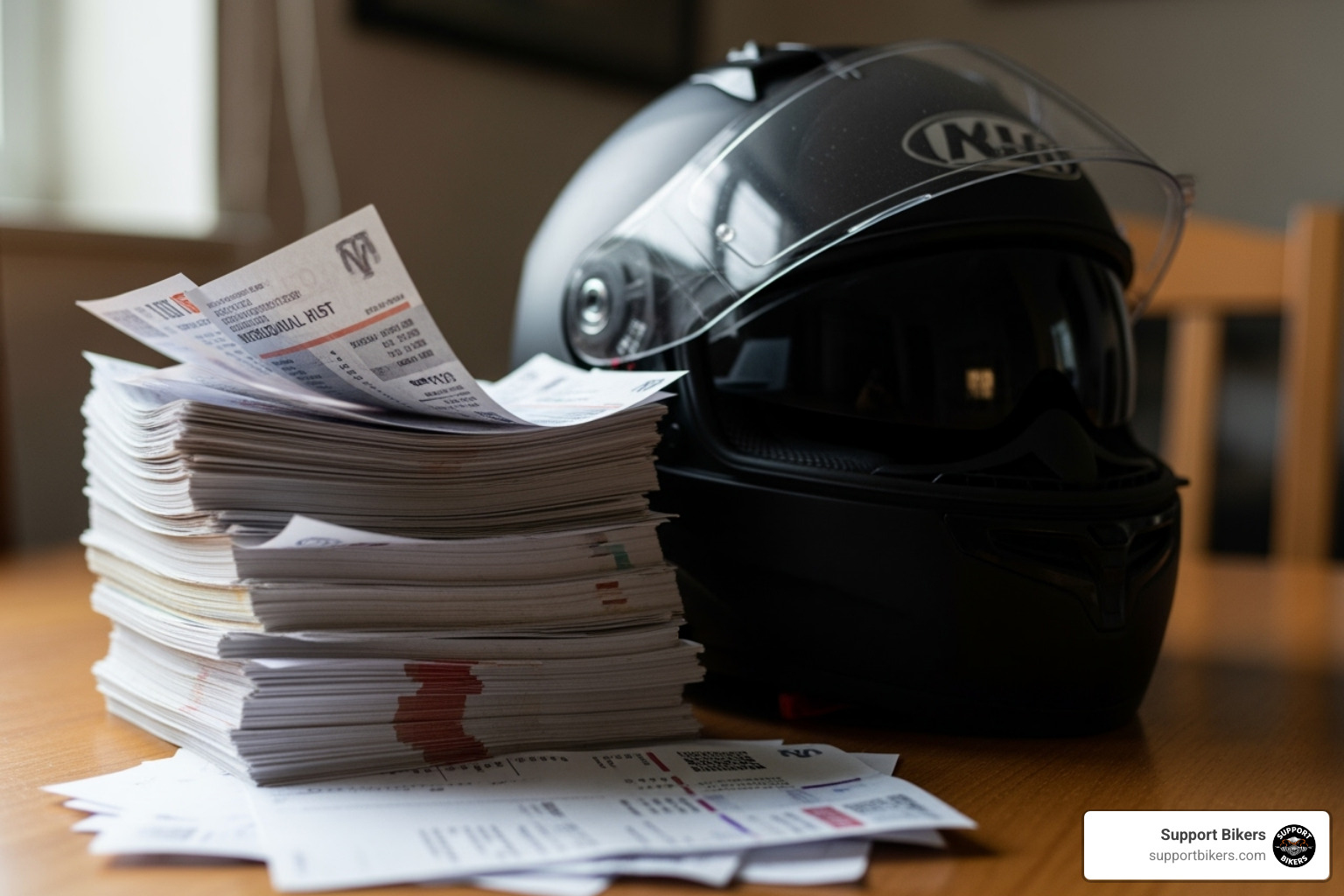
These are the measurable financial costs resulting from the accident. They form the foundation of your claim.
- Medical Expenses: This includes everything from the ambulance ride and hospital stays to surgeries, physical therapy, and future medical care.
- Lost Wages: Compensation for the income you lost while unable to work, including salary, bonuses, and commissions.
- Loss of Earning Capacity: If your injuries permanently affect your ability to work, this covers the loss of future income.
- Property Damage: This covers the repair or replacement of your motorcycle, as well as damaged gear like your helmet, jacket, and boots.
- Out-of-Pocket Expenses: Costs for things like transportation to medical appointments or home modifications.
Non-Economic Damages: The Intangible Costs
These damages compensate for non-financial losses, which are just as real and devastating.
- Pain and Suffering: Compensation for the physical pain and discomfort you’ve endured.
- Emotional Distress & PTSD: This addresses the psychological impact, such as anxiety, depression, or fear. Serious crashes can lead to PTSD, a debilitating condition.
- Loss of Enjoyment of Life: If your injuries prevent you from participating in hobbies and activities you once loved, like riding.
- Scarring and Disfigurement: Compensation for permanent physical reminders of the accident that can impact self-esteem.
- Loss of Consortium: This allows a spouse to claim damages for the negative impact on your relationship.
How Injury Claims Help Innocent Victims of a Motorcycle Accident Achieve Financial Recovery
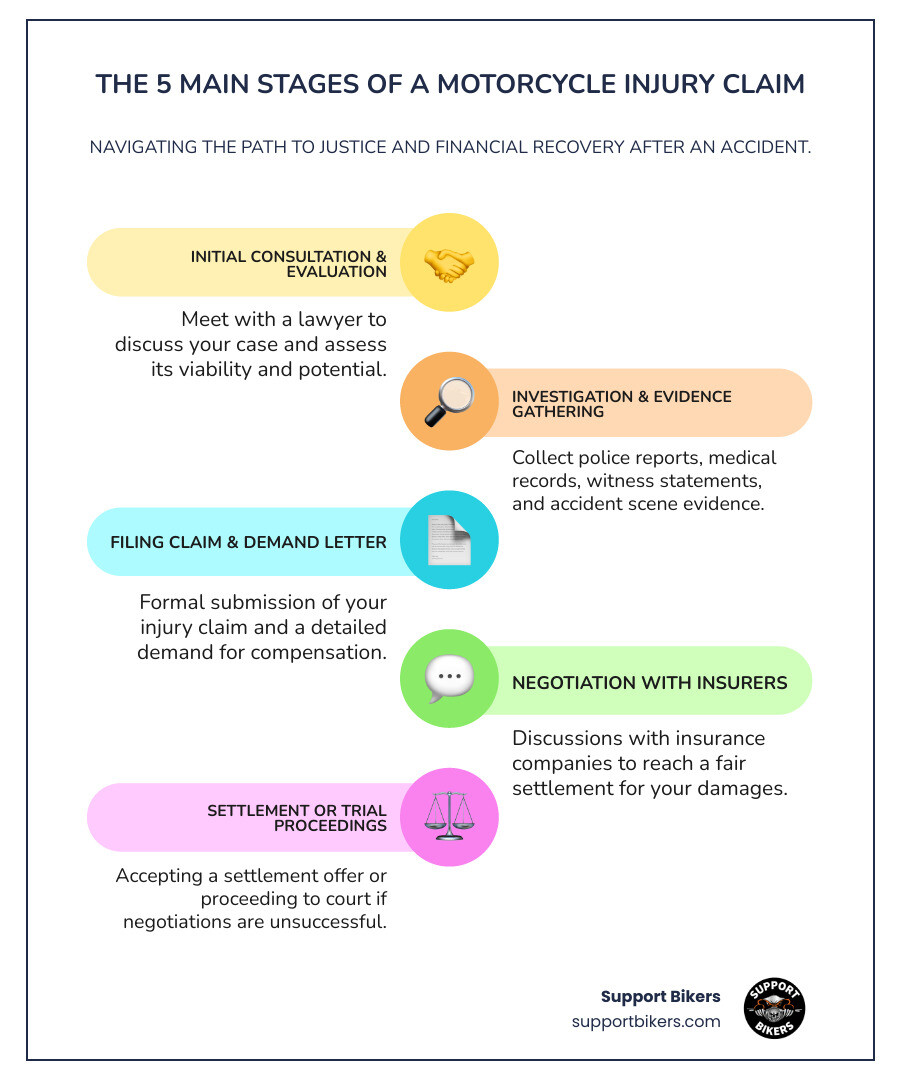
The claims process is how injury claims help innocent victims of a motorcycle accident regain their financial footing. It begins with filing the claim, where your lawyer formally notifies the at-fault party’s insurer. This is followed by the investigation phase, where your legal team gathers evidence like police reports, medical records, and witness statements to build a strong case.
Once your medical prognosis is clear, your attorney prepares a demand letter. This comprehensive document details the accident, your injuries, and all your damages, concluding with a specific settlement demand. The negotiation phase follows, where your lawyer counters the insurance company’s inevitable lowball offers. While many cases are resolved here, as detailed in the Motorcycle Accident Settlement Process, your team must be prepared for litigation if a fair offer isn’t made.
How an Injury Claim Helps Steer Insurance
Insurance companies prioritize their profits, not your well-being. An injury claim, managed by a lawyer, levels the playing field. Adjusters are trained to minimize payouts by asking leading questions or pressuring you into a quick, low settlement. Your lawyer handles all communication, countering lowball offers with evidence-based arguments.
Your legal team will prepare a demand package that proves the full value of your damages, working with medical and economic experts to project future costs and lost earning capacity. This ensures your total losses are accurately reflected. For financial help during this process, resources like the Motorcycle Accident Fund can provide support.
What if the At-Fault Driver is Uninsured?
If the at-fault driver has no or insufficient insurance, your own policy may be your lifeline. Uninsured/Underinsured Motorist (UM/UIM) coverage, if you have it, allows you to file a claim with your own insurer. Your insurance company then covers your damages up to your policy limits and seeks reimbursement from the at-fault driver.
In some situations, legal action against the at-fault driver personally may be an option if they have significant assets. When funds are needed while your case is pending, options like Motorcycle Accident Lawsuit Funding can provide a crucial bridge.
Why You Shouldn’t Go It Alone: The Role of a Motorcycle Accident Lawyer
Dealing with the aftermath of a motorcycle accident is stressful enough without battling insurance companies. This is where a lawyer becomes your most important ally in understanding how injury claims help innocent victims of a motorcycle accident.

An experienced motorcycle accident lawyer levels the playing field. Insurance companies have teams of professionals working to pay you as little as possible. Your lawyer brings equal legal expertise to the fight, navigating complex procedures, insurance policies, and filing deadlines (statutes of limitations) that could otherwise sink your claim.
A lawyer’s primary role is to calculate the true value of your claim. Most victims underestimate their losses, forgetting future medical needs or lost earning capacity. A lawyer works with experts to determine the full, long-term value. Given that motorcycle riders are 28 times more likely to die in a crash, these cases require specialized knowledge to handle severe injuries and counter anti-rider bias. Motorcycle Accident Legal Services are designed for these unique challenges.
How a Lawyer Maximizes Your Compensation
A skilled lawyer actively works to maximize your compensation. They will:
- Thoroughly investigate the crash, often hiring accident reconstruction experts to prove fault.
- Hire expert witnesses, such as medical professionals and economists, to testify to the extent of your damages.
- Negotiate aggressively with insurers, countering their tactics and lowball offers with hard evidence.
- Handle all communication, protecting you from saying something that could be used against you.
- File a lawsuit if necessary, showing the insurer you are serious about receiving fair compensation.
Most motorcycle accident lawyers work on a contingency fee basis, meaning you pay nothing unless they win your case. This gives you access to expert legal help without any upfront financial risk.
Frequently Asked Questions about Motorcycle Injury Claims
Here are answers to common questions about how injury claims help innocent victims of a motorcycle accident.
How long do I have to file a motorcycle accident claim?
The deadline to file a claim is called the statute of limitations, and it varies by state, typically ranging from one to three years from the accident date. For example, Illinois generally gives you two years. However, claims against government entities may have much shorter deadlines. It is critical to act quickly, as evidence disappears and witnesses’ memories fade. Contact a lawyer as soon as possible to ensure you don’t miss your window to file.
What if I was partially at fault for the accident?
Being partially at fault does not automatically bar you from recovering damages. Most states use a comparative negligence system. In modified comparative negligence states (like Illinois), you can recover damages as long as you are not more than 50% at fault. Your compensation will be reduced by your percentage of fault. For example, if you are 20% at fault, you can still recover 80% of your damages. Don’t assume you’re at fault; an investigation by a lawyer can clarify the true circumstances and challenge unfair blame.
How much is my motorcycle accident claim worth?
There is no average settlement amount, as every case is unique. The value of your claim depends on several factors:
- Severity of your injuries: More serious injuries lead to higher compensation.
- Economic losses: This includes all current and future medical bills, lost wages, and property damage.
- Non-economic damages: Compensation for pain, suffering, and emotional distress.
- Insurance policy limits: The amount of available coverage can cap your recovery.
- Strength of evidence: Clear proof of fault and damages strengthens your claim.
An experienced lawyer can assess these factors to provide a realistic valuation of your claim after a thorough investigation.
Conclusion: Your Path to Recovery and Justice
The road to recovery after a motorcycle accident isn’t one you have to travel alone. Understanding how injury claims help innocent victims of a motorcycle accident is your roadmap back to stability. An injury claim provides the financial stability to cover medical bills and lost wages, promotes accountability for negligence to make roads safer, and allows you to focus on healing while a legal professional handles the fight.
The biker community looks out for its own. We understand the unique challenges riders face, and resources exist to help. Your journey forward starts with taking the first step and learning about your rights. The road ahead may be tough, but you’re not riding it solo.
If you or a fellow rider needs immediate financial assistance after an accident, get help from the Support Bikers Wrecked Rider Fund.




0 Comments