
Gremlin Bell Tradition: 10 Powerful Positive Facts for 2025
The Guardian Spirit of the Open Road
The gremlin bell tradition is a cherished motorcycling custom where small bells are attached to bikes as protective talismans. For riders seeking to understand this tradition, here’s what you need to know:
- What it is: A small metal bell (usually 1″ in size) hung from the lowest part of a motorcycle frame
- Purpose: Believed to trap road gremlins that cause mechanical failures and accidents
- Key rule: Must be received as a gift, not purchased by the rider
- Placement: Attached to the lowest part of the frame where it can ring during rides
- Origin: Traces back to WWII pilots who used bells to ward off “gremlins” blamed for aircraft malfunctions
The gremlin bell tradition represents more than just superstition—it symbolizes the brotherhood and protective spirit of the motorcycling community. These small bells, often made of pewter or brass, are believed to capture mischievous road spirits in their hollow chambers, where the constant ringing drives them crazy until they flee.
Whether you ride a Harley-Davidson, Indian, or any other motorcycle, this tradition bridges generations of riders through a shared belief in protection and goodwill. Many experienced riders have kept the same bell for decades, transferring it from bike to bike as a constant guardian companion.
I’m Sonny Da Badger, founder of Support Bikers and lifelong motorcycle enthusiast who has witnessed how the gremlin bell tradition strengthens bonds between riders while serving as a meaningful token of protection on the open road.
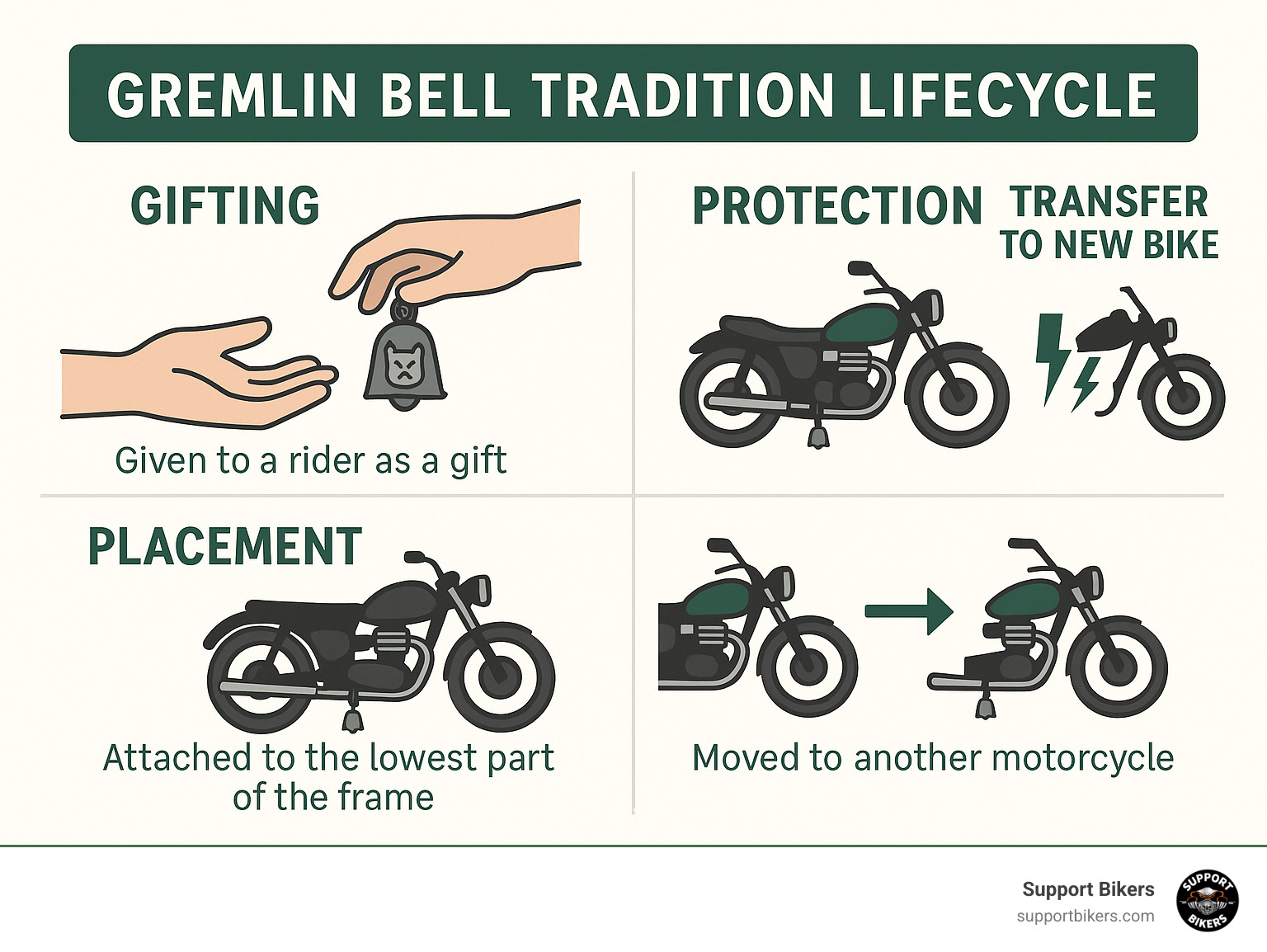
If you’ve never seen a gremlin bell in action, just look beneath the next Harley you encounter—that tiny jingling guardian might just be keeping evil road spirits at bay.
Gremlin bell tradition terms to know:
– Custom motorcycle bells
– Gift ideas for bikers
What Is a Gremlin Bell?
Ever noticed that tiny metal bell dangling beneath a Harley? That’s a gremlin bell tradition in action – a small but mighty guardian for riders on the open road.
A gremlin bell (sometimes called a guardian bell, spirit bell, or biker bell) is a compact metal charm typically measuring just an inch in length. Most are crafted from pewter or brass, though you’ll find modern versions in stainless steel and other durable metals that can withstand thousands of miles of road vibration.

But these aren’t just decorative trinkets. According to motorcycle folklore, these bells serve a crucial purpose – protecting riders from those pesky “road gremlins” that seem determined to cause trouble. You know the ones – mysterious electrical gremlins that make your lights flicker, strange mechanical hiccups that your mechanic can never quite diagnose, or that unexplained noise that appears and disappears like a ghost.
“Gremlins at work” is how many veteran riders explain those frustrating, hard-to-diagnose issues that plague motorcycles. This terminology has deep roots stretching back to aviation communities before making its way into biker culture, especially among Harley-Davidson and Indian motorcycle enthusiasts.
While the gremlin bell tradition started with American cruisers, it has spread throughout riding communities worldwide, becoming a universal symbol of protection that transcends brand loyalty.
How the Bell “Works”
The folklore behind these magical little bells is delightfully specific. When properly mounted at the lowest point of your motorcycle frame, the bell creates a constant, gentle ringing as you cruise down the highway. This isn’t just pleasant background noise – it’s your protection system in action.
According to tradition, this ringing first attracts road gremlins to the bell instead of your vulnerable engine components or electrical system. Once the curious gremlins investigate, they become trapped inside the bell’s hollow chamber. The continuous ringing then drives these mischievous spirits absolutely crazy until they’re forced to release their grip and fall to the road below.
As one leather-clad veteran rider explained with a wink, “Those gremlins have super-sensitive hearing. That constant ringing drives them so crazy they abandon ship—er, bike. Some old-timers even say that’s where potholes really come from!”
While the gremlin bell tradition has supernatural roots, many modern riders view it more as a mindset than literal protection. Similar to how travelers might carry a St. Christopher medal, the bell serves as a tangible reminder to ride cautiously and respect motorcycling’s inherent dangers.
Whether you’re a true believer in the bell’s protective powers or simply appreciate the tradition’s community-building aspect, these little guardians represent something powerful – the shared hope for safe journeys among those who accept both the freedom and risks of two-wheeled trips.
The Gremlin Bell Tradition: Legends, Origins, and History
The gremlin bell tradition has roots as colorful and winding as the open roads where these tiny guardians serve their purpose. Like many great motorcycle customs, the true origins blend fact, folklore, and the weathered wisdom of riders who came before us.
Many riders trace the tradition back to World War II, when American and British pilots—facing unexplainable mechanical failures—hung small bells in their cockpits to ward off mischievous “gremlins.” This superstition ran so deep that Warner Bros. even created a Bugs Bunny cartoon called “Falling Hare” featuring these mechanical troublemakers. When the war ended, veterans who traded their wings for wheels brought this protective practice to their Harley-Davidson and Indian motorcycles—a natural transition considering both manufacturers had produced over 100,000 bikes for military use.

The 1950s and 60s offer another practical theory—that these bells initially served as simple theft deterrents. Early riders would attach bells to their precious machines so that nighttime tampering would create enough noise to alert a sleeping owner. Practicality often births tradition in the motorcycling world.
Medieval connections add another layer to the gremlin bell tradition. Church bells were rung throughout history to drive away evil spirits, especially during plagues and funeral processions. These “dead bells,” sometimes baptized in holy water specifically for funeral use, established bells as protective devices long before motorcycles roared onto the scene.
The legendary Sturgis Motorcycle Rally played its part too. Some old-timers claim the Jackpine Gypsies Motorcycle Club distributed bells as entry tokens during early rallies in the 1930s, when the event was just a half-mile dirt-track race drawing a couple hundred spectators. These tokens eventually transformed into symbols of brotherhood and protection.

Core Legends of the Gremlin Bell Tradition
Ask three riders about gremlin bells, and you’ll likely hear three different stories. The most enduring tale—”The Old Biker’s Desert Tale”—tells of a lone rider stranded near the Mexican border after mysterious motorcycle failure. As darkness fell, strange happenings tormented him: tools vanished, parts moved on their own, and eerie sounds echoed from the shadows.
Desperate, the biker remembered the Christmas bells in his saddlebag. He began ringing one continuously, which not only stopped the supernatural mischief but also alerted two nearby campers who came to his rescue. After sharing his ghostly experience, he began gifting bells to fellow riders as protection against what he named “road gremlins.”
Another beloved story involves winter riding and sleigh bells. Early American motorcyclists would carry sleigh bells during cold-weather journeys, both for safety and tradition. Over generations, this practical noisemaker evolved into the smaller, symbolic gremlin bells riders cherish today.
The Jackpine Gypsies’ contribution remains strong in motorcycling lore. Veterans of early Sturgis rallies often recount how bells were initially given as entry tokens for races and events. These simple gifts gradually transformed into powerful symbols of membership and protection within the growing motorcycle community.
Historical Timeline of the Gremlin Bell Tradition
The gremlin bell tradition didn’t appear overnight but evolved through centuries of bell-related superstitions and practices. Ancient Buddhists, Africans, and Europeans all used bells to repel evil forces. Medieval church bells rang during plagues and funerals with the same protective intent. By the 1940s, military pilots had adopted bells as talismans against mechanical gremlins.
When veterans returned home between 1945 and the 1950s, they brought this practice to their civilian motorcycles. Through the 1970s and 80s, motorcycle clubs formalized the tradition with specific gifting rituals and placement rules. The 1990s saw commercial production increase dramatically, with Guardian® Bell becoming a registered trademark. Today, online communities have spread the tradition globally, with custom designs reflecting everything from military service to personal relationships.
Modern bells range from traditional pewter designs to elaborate custom creations featuring skulls, angels, or personalized engravings. Research from the RAF Museum on aviation lucky charms confirms how deeply these protective traditions were embedded in military culture before transferring to motorcycle communities.
What remains unchanged is the core belief: a small bell, gifted with genuine concern for a rider’s safety, provides both physical and spiritual protection on the unpredictable open road. Whether you believe in road gremlins or simply appreciate the brotherhood behind the gesture, these tiny guardians continue to ring out across highways worldwide.
When riders face challenges on the road, communities like ours come together. Learn how you can help fellow motorcyclists in need through our Wrecked Rider Fund.
Rules and Etiquette of Gremlin Bells
There’s something special about the gremlin bell tradition that goes beyond just hanging a trinket on your bike. These little guardians come with their own set of rules and customs that have been passed down through generations of riders, shared over campfires and in clubhouses across America.
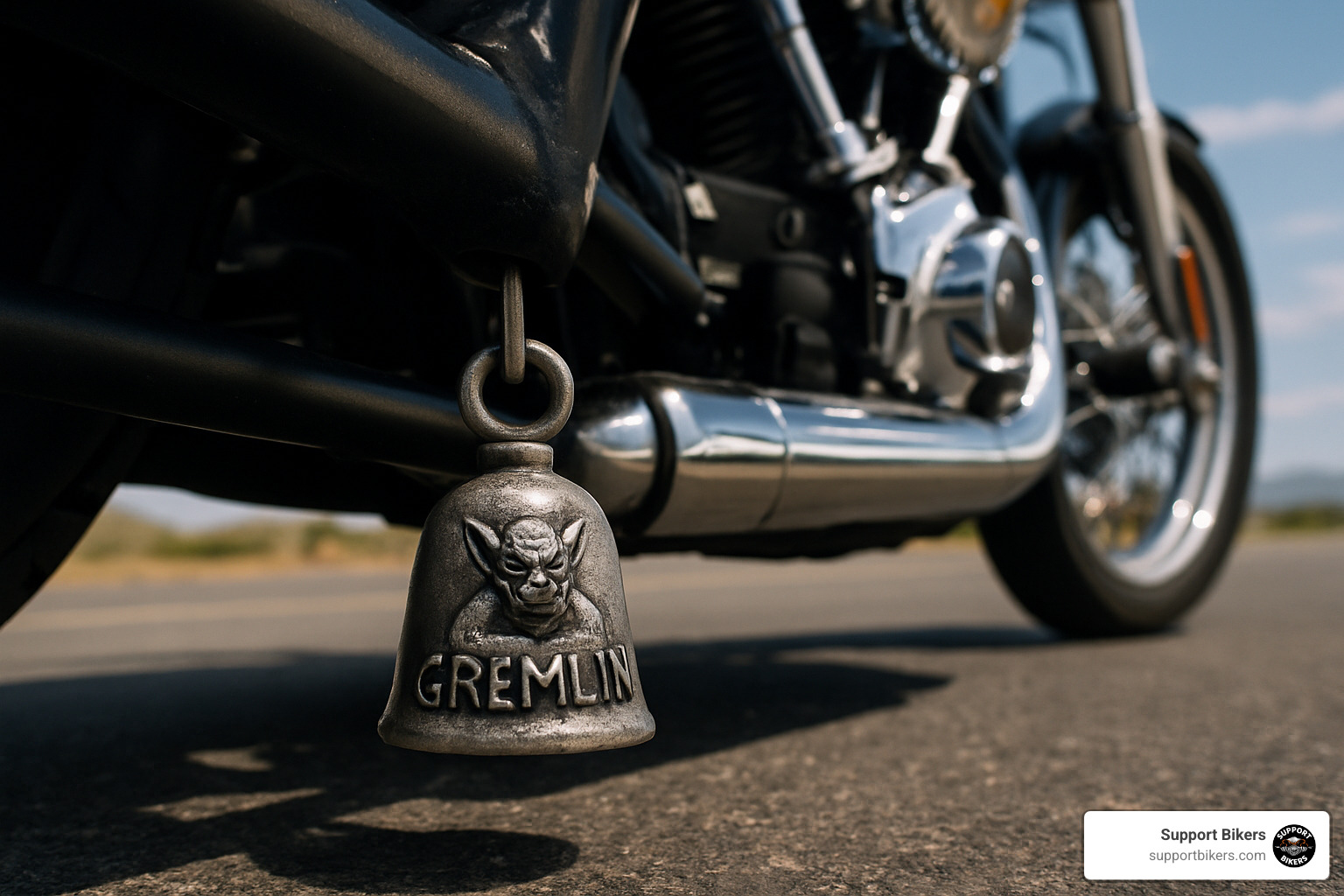
I’ve met riders who’ve kept the same bell for decades. One gentleman I spoke with at a rally in Daytona had transferred his bell across seven different Harleys since 1971. “This little guy’s seen more of America than most people,” he told me with a wink, patting the weathered brass bell hanging beneath his touring bike.
The most sacred rule of the gremlin bell tradition is that it must be given as a gift. The protection doesn’t come from the metal itself, but from the goodwill and concern behind the giving. A self-purchased bell, according to old-timers, is just decoration – it lacks the protective spirit that makes these charms special.
Your bike should wear just one bell – positioned at the lowest point of the frame where road gremlins would first try to climb aboard. This placement also ensures the bell will ring freely as you ride, constantly annoying any mischievous spirits that might get trapped inside.
When it’s time to sell your bike, proper etiquette demands you remove your bell before handing over the keys. The protection is meant for you, not the motorcycle itself. Many riders perform a small ceremony, removing the bell while thanking it for the protection it provided.
The karma surrounding stolen bells is particularly strong in biker folklore. “If stolen, karma will take care of the rest,” as one leather-clad veteran told me outside a diner in Sturgis. The belief is that a stolen bell not only loses its protective power but actually brings misfortune to the thief – all those trapped gremlins suddenly released for revenge.
Regular cleaning isn’t just about keeping your bell shiny – it’s a ritual of respect. Many riders polish their bells while remembering riding companions who’ve taken their final journey, turning a simple maintenance task into a moment of remembrance.
Core Rules of the Gremlin Bell Tradition
The heart of the gremlin bell tradition lies in its giving. When someone cares enough about your safety to gift you a bell, their concern and goodwill charge the bell with protective energy. This is why traditionalists insist that self-purchased bells offer little protection – they lack that essential ingredient of someone else’s care.
In the most traditional interpretation, the person gifting the bell should also install it on your motorcycle. I’ve seen grizzled riders stand back respectfully, refusing to touch their new bell until their friend has zip-tied it securely beneath the frame. This passing of protection from hand to bike completes the circle of the gift.
“A bell given as a gift has double protective power; a handmade one has triple,” an old road captain once explained to me while we waited out a thunderstorm under a highway overpass. His bell, crafted from a shell casing by his Vietnam buddy, had been with him for over 40,000 miles.
When it comes to attachment, most experienced riders recommend using a quality zip-tie rather than safety wire. Wire can rust over time and potentially scratch your precious paint, while a good zip-tie provides secure attachment without risking damage to your bike.
If you’re looking for a quality bell that honors this tradition, the Support Bikers Gremlin Bell is crafted specifically for riders who value both protection and community.
What Happens if the Rules Are Broken?
The gremlin bell tradition carries consequences for those who don’t respect its customs. While younger riders might be more relaxed about the rules, those who’ve acceptd the tradition for decades tend to follow them with reverence.
Self-purchased bells occupy a gray area in modern riding culture. Some riders suggest they offer minimal protection – better than nothing on a lonely highway – while traditionalists insist they’re merely decorative. The general consensus remains that the bell’s power comes primarily from the goodwill of its giver.
The folklore surrounding stolen bells is particularly colorful. Not only does a stolen bell lose its protective qualities, but it’s said to carry all its trapped gremlins with it, releaseing them on the thief. I’ve heard stories of riders who allegedly stole bells experiencing mysterious electrical failures, flat tires, and even minor crashes shortly afterward.
Leaving your bell on a bike you’re selling is considered disrespectful to both the tradition and the new owner. The protection isn’t tied to the motorcycle but to the relationship between you, the bell, and the person who gave it to you. A proper transfer requires intention and acknowledgment – usually a handshake and a few words about the bell’s history.
“Whether you believe in the superstition or not, following the tradition shows respect for those who came before us and the community we’re all part of,” explained a silver-haired woman rider I met at a charity run in Texas. Her bell, gifted by her late husband, had been with her through 30 years and three major accidents – none of which had resulted in serious injury.
These rules aren’t just superstitions – they’re expressions of the values that bind the riding community together: respect, protection, and the bonds between those who share the freedom of the open road.
Choosing, Installing, and Caring for Your Bell
Picking the perfect gremlin bell is more than just grabbing any shiny trinket – it’s about finding a guardian that resonates with your riding spirit. Traditional riders swear by pewter or brass bells, prizing these metals for their rich, clear tone and ability to withstand thousands of miles of open road. Modern riders sometimes opt for stainless steel versions, which stand up beautifully to rain, snow, and whatever else Mother Nature throws your way.

The world of gremlin bell tradition offers something for every rider’s taste. You’ll find everything from stripped-down, classic guardian bells that let their protection speak for itself, to intricately designed angel bells whose wings seem ready to shield you from harm. Military-themed bells honor service and sacrifice, while custom-engraved bells carry names, dates, or personal mantras that make each journey meaningful. Many motorcycle clubs have their own distinctive bells, proudly displaying brotherhood symbols that strengthen the bonds between riders.
There’s something especially powerful about handcrafted bells in the gremlin bell tradition. Some riders lovingly fashion bells from recycled materials or restore antique bells to their former glory. As one seasoned rider told me, “A bell given as a gift has double protective power; a handmade one has triple.” That extra layer of intention seems to amplify the protective energy.
When it comes to mounting your bell, lower is better. Most riders choose spots like the frame cross member near the engine, the lowest point near the front fork, or attached to the brake pedal arm. Some prefer a lower frame rail, while trike riders often secure their bells to the front lower wheel strut. The key is finding a spot where your bell can ring freely without striking the ground or getting caught in moving parts.
Step-by-Step Installation Guide
Installing your gremlin bell properly honors the gremlin bell tradition while ensuring it stays put through all your trips. Here’s how to do it right:
- Select a Low Point: Choose the lowest practical spot on your frame, preferably toward the front. This is where road gremlins first attempt to climb aboard, so you want your bell ready to greet them.
- Inspect Clearance: Before finalizing placement, check that your bell won’t hit the ground during sharp turns or when your suspension compresses. A bell that drags can become a safety hazard.
- Secure the Fastener: Thread your zip-tie or leather cord through the bell’s loop and around your chosen frame member. If using a zip-tie (my personal recommendation), pull it snug and trim the excess. For leather, a secure double knot will keep your guardian in place.
- Road-Test Jingling: Take a quick spin around the block to make sure your bell rings with a pleasant, subtle tone. If it’s silent, it might be mounted too securely against the frame; if it’s clanging loudly, you might need to adjust its position.
- Maintenance Check: Add your bell to your regular bike maintenance routine. A quick visual inspection ensures it hasn’t worked loose during your travels.
| Fastener Type | Advantages | Disadvantages | Best For |
|---|---|---|---|
| Zip-Tie | No scratching, no rust, easy to replace | May degrade in extreme weather | Most applications |
| Coated Wire | Very secure, long-lasting | Potential for rust, harder to remove | Long-term mounting |
| Leather Cord | Traditional, aesthetically pleasing | Requires replacement as it weathers | Show bikes, traditionalists |
Care & Maintenance Best Practices
Taking care of your gremlin bell isn’t just about keeping it shiny – it’s about respecting the gremlin bell tradition and maintaining its protective energy. Here’s how riders keep their guardians in top form:
When you wash your bike, give your bell a gentle cleaning too. Road grime can muffle its ring, so a quick rinse with mild soap keeps it sounding clear and bright. For brass or pewter bells, an occasional polish brings back their luster and, according to tradition, renews their protective powers.
Many riders turn bell maintenance into a meaningful ritual. As they polish the metal, they take a moment to remember riding buddies who’ve passed on or to express gratitude for safe journeys. This quiet reflection transforms a simple maintenance task into something deeper – a connection to the broader brotherhood of the road.
Don’t forget to check your fastener regularly. Zip-ties can become brittle from UV exposure, and leather cords weather over time. A secure bell stays with you; a lost bell leaves you unprotected.
If your bell becomes cracked or its voice grows faint, it may be time for an honorable retirement. Some riders follow a beautiful tradition of placing their faithful guardian in a mason jar with a quarter-gallon of motorcycle oil – preserving its spirit while acknowledging its years of service.
When your bell has protected you through thousands of miles and countless trips, it becomes more than just metal – it becomes a trusted companion. Treat it with the same care you’d show any faithful friend of the road.
Looking for a quality gremlin bell of your own? The SupportBikers Gremlin Bell is crafted from premium materials by riders who understand and respect the tradition.
Community, Camaraderie, and Modern Variations
The gremlin bell tradition has woven itself into the fabric of motorcycling culture, creating bonds that run deeper than mere superstition. This tradition flourishes especially among Harley-Davidson and Indian riders, where it’s become almost as essential as chrome and leather. While cruiser and touring enthusiasts tend to accept these tiny guardians most enthusiastically, the practice continues to spread across all types of riding communities, bringing riders together through shared beliefs and mutual protection.
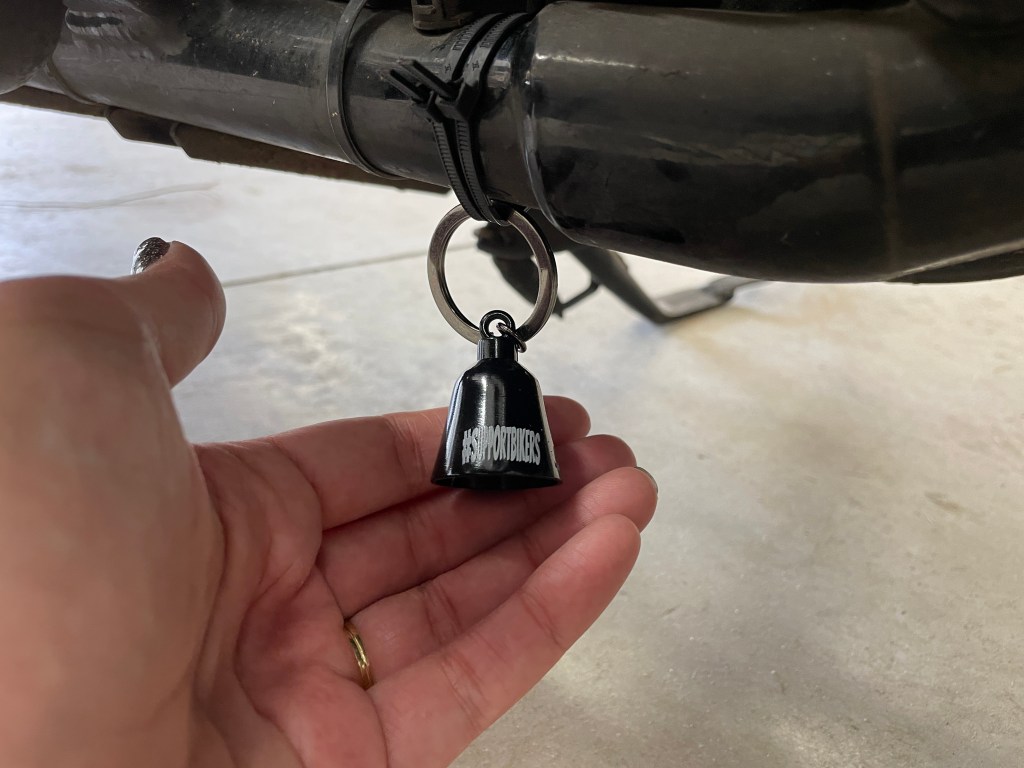
Guardian Bell – Gremlin
When motorcycle clubs welcome new members, gifting a gremlin bell often marks this important milestone. This small gesture carries enormous significance – it’s the veteran riders saying, “We’ve got your back on the road.” I’ve witnessed dozens of these ceremonies, and there’s always something moving about watching a grizzled rider carefully attach a bell to a newcomer’s bike.
At bike-blessing events across the country, chaplains and clergy often incorporate bells into their ceremonies. One rider told me after receiving his bell, “It might not stop a car from cutting me off, but it puts my mind at ease knowing someone cared enough to look out for me.” This sentiment captures the tradition’s true power – it’s not just about warding off mechanical gremlins but strengthening human connections.
The gremlin bell tradition has expanded beyond riders themselves. Partners, family members, and friends now participate by giving bells as expressions of love and concern. You don’t need to ride to be part of this protective ritual – you simply need to care about someone who does. This aspect has helped the tradition evolve from pure superstition to a meaningful symbol of community support.
With the rise of online shopping, riders can now choose from thousands of personalized designs reflecting everything from military service to spiritual beliefs. What was once a simple pewter bell has transformed into an expression of personal identity while maintaining its protective purpose.
The Gremlin Bell Tradition in Today’s Riding Communities
Modern riding communities have acceptd the gremlin bell tradition with remarkable devotion. Browse any motorcycle forum and you’ll find riders sharing stories about bells they’ve carried for decades – some reporting the same bell has protected them across five or six different motorcycles over 50+ years.
These online communities have fostered support networks where riders offer bells to those who’ve experienced accidents or close calls. After a particularly nasty spill, one rider shared how fellow club members arrived at the hospital with a new bell – a gesture that meant more than any get-well card could express.
While few riders claim their bells provide absolute protection, many describe them as “symbolic insurance” or acknowledge the psychological comfort they provide. As one veteran rider put it, “I don’t know if it actually works, but what’s a little cheap insurance, right?”
The mental safety boost shouldn’t be underestimated. That small jingling reminder can keep riders mindful of road hazards and potential dangers. In this way, the bell serves as a constant companion urging caution – perhaps its most tangible protective function.
Regional variations have naturally developed across different riding communities. In the American Southwest, bells often incorporate Native American designs and turquoise accents. European riders might favor bells with historical or heraldic motifs. These regional differences show how the tradition adapts to local cultures while maintaining its protective purpose.
Commercialization and Custom Design Trends
What began as informal exchanges of found or repurposed bells has evolved into a thriving marketplace. The gremlin bell tradition now supports artisan makers who create handcrafted bells using traditional metalworking techniques, often incorporating semi-precious stones or personalized engravings for milestone events like new bike purchases or retirement rides.
The trademarked Guardian® Bell has become one of the most recognized commercial versions, complete with U.S. patent protection. This official branding demonstrates how the tradition has transitioned from folklore into mainstream motorcycle culture without losing its soul.
For environmentally conscious riders, eco-friendly options using recycled metals offer a way to honor tradition while aligning with modern values. These sustainable bells appeal to younger riders who want to participate in motorcycling heritage while staying true to their environmental principles.
Advanced manufacturing techniques have revolutionized bell design. Laser engraving now allows for intricate details, portraits, or lengthy inscriptions that would have been impossible with traditional methods. Some riders commission bells featuring the faces of riding companions who have passed, creating moving memorials that travel with them on every journey.
Themed collections cater to specific interests – military service branches, spiritual symbols, club insignias, or favorite riding routes. This diversification ensures every rider can find a bell that resonates with their personal story while still participating in the broader tradition.
Despite this commercialization, the heart of the gremlin bell tradition remains intact. Even mass-produced bells transform into meaningful talismans when given with genuine concern for a rider’s safety. The power doesn’t come from the metal itself but from the human connection it represents – a truth that keeps this tradition alive and thriving in today’s riding community.
Looking for resources on motorcycle culture and traditions? Visit Chopper Exchange Resources to learn more about the rich heritage of American motorcycling.
Frequently Asked Questions about Gremlin Bells
Whenever I talk about the gremlin bell tradition with new riders, I’m always met with a flurry of questions. It’s a tradition rich with nuance and meaning, so let’s address some of the most common curiosities I hear:
Why must a gremlin bell be given as a gift?
The gift requirement isn’t just a quirky rule—it’s the very heart of what makes these bells special. A bell’s protective power springs from the genuine concern and goodwill of the person giving it to you. When someone cares enough about your safety to present you with this small guardian, their intention creates the protective energy that surrounds you on the road.
I remember an old-timer telling me, “A bell you buy yourself is just metal—a bell given with love is magic.” This sentiment appears in almost every source on the tradition, from forum discussions to the Chicago Tribune’s coverage of motorcycling customs.
Some modern riders have relaxed this rule, suggesting self-purchased bells offer at least some protection. But traditional believers insist the relationship between giver and receiver is what activates the bell’s full power. The emotional connection creates something that simply can’t be bought—only given.
Where exactly should I attach the bell on my motorcycle?
Your gremlin bell needs to be mounted at the lowest point of your motorcycle frame, preferably toward the front. The reasoning is practical within the folklore—road gremlins tend to jump up from the road surface, so they’ll encounter the bell first before reaching vital parts of your bike.
Most riders choose one of these locations:
– The frame cross member near the engine
– The front fork’s lower section
– Attached to the brake pedal arm
– A lower frame rail
– The front lower wheel strut (for trike riders)
When it comes to attachment, I’ve found zip-ties work better than safety wire. Wire can rust over time and potentially scratch your paint, while a quality zip-tie provides secure attachment without damage. Just make sure your bell has proper clearance from the ground and won’t hit any moving parts, especially when your suspension compresses fully over bumps.
Some old-school riders swear the left side placement offers stronger protection, though in my experience, the gremlin bell tradition varies widely on this particular detail depending on who you ask.
Can a non-rider participate in the gremlin bell tradition?
Not only can non-riders participate—they often create the most powerful protection of all! When a loved one who doesn’t ride gives you a bell, it carries the weight of their genuine concern for your safety. There’s something especially meaningful about receiving a bell from someone who worries every time you hit the road.
I’ve seen tough, weathered bikers become misty-eyed when receiving bells from their children, spouses, or parents. These gifts represent a beautiful bridge between the riding and non-riding worlds—a way for loved ones to say “I want you to come home safe” without saying a word.
The gremlin bell tradition transcends the mechanics of motorcycling and connects with universal human desires for protection. If you’re considering giving a bell to a rider in your life, your sincere wish for their safety matters far more than technical knowledge about motorcycles.
The authenticity of your concern is what infuses the bell with its protective spirit. It’s one of the most meaningful ways you can connect with the riding experience of someone you care about, even if you’ve never thrown a leg over a bike yourself.
Looking to support a fellow rider who’s been in an accident? Learn more about how you can help through our Wrecked Rider Fund.
Conclusion
The gremlin bell tradition stands as one of motorcycling’s most enduring and meaningful customs. Like the constant hum of an engine on the open road, this tradition has traveled through decades, connecting generations of riders through a shared belief in protection and brotherhood.
Whether you’re drawn to the folklore of road gremlins or simply appreciate the symbolic gesture, these tiny bells represent something much larger—they embody the spirit of community that makes motorcycling culture so special. Every gifted bell carries with it a silent wish for safe travels and the promise that you’re never truly riding alone.
At Support Bikers, we’ve witnessed countless heartfelt exchanges of these protective talismans. From the dusty grounds of Sturgis to sun-drenched Australian highways and winding German backroads, the gremlin bell tradition speaks a universal language that riders everywhere understand. It’s more than superstition—it’s a tangible expression of care that transcends words.
The beauty of this tradition lies in its simplicity. A small bell, thoughtfully gifted and carefully mounted, creates a continuous connection between the giver and receiver. Each gentle ring serves as a reminder that someone cares about your safe return. For many riders, that awareness alone makes every journey a little safer.
As you continue your own riding journey, remember what makes this tradition special: the bell must come as a gift, find its home at the lowest point of your frame, receive proper care throughout its service, and when the time comes, be passed on with the same intention that brought it to you.
The gremlin bell tradition reminds us that motorcycling has always been about more than the machine or the road—it’s about the people who share this passion and look out for one another. From the veteran rider who’s kept the same bell for fifty years to the nervous spouse who gifts one before a first long journey, we’re all participating in a tradition that honors both freedom and connection.
Ride safe, friends. And may your bell keep singing its protective song for many miles to come.
Want to help fellow riders facing tough times? The motorcycling community takes care of its own. Support our Wrecked Rider Fund and be there for motorcyclists navigating challenges after accidents or hardships.




0 Comments